Showing posts with label 2015 Movie Reviews. Show all posts
Sunday, March 27, 2016
"Spotlight" Review
Title: Spotlight
Directed by: Tom McCarthy
Screenplay by: Tom McCarthy and Josh Singer
Year: 2015
Spotlight is a film that came out of nowhere. I did not come across any news for this film during its production period, I never caught a trailer, and I did not even know of its release. But then I came across some reviews of the film, all of them praising it as one of the year's best. So naturally, I had to go out and see this film. All I knew about the film going in was the cast and the basic premise, and not much else. So I walked in not really knowing what to expect. And how did I walk out?
This film tells the true story of the Boston Globe's Spotlight writing team and their investigation into the Catholic church abuse that took place in Boston. As they delve deeper into the allegations, they realize this might be more than just a case of abuse, but perhaps a decades-long cover up.
One look at the cast list is enough to make jaws drop because this is an impeccable ensemble cast. And I truly mean ensemble because there is no main character. The star of the film is the diegetic writing team as a whole and each cast member brings their best to the table. Michael Keaton's career has seen a revival with last year's Birdman and now Spotlight. Keaton proves that he still has great work ahead of him as he is terrific in this picture. Rachel McAdams and Mark Ruffalo probably get the most screen time as they are the ones who do most of the investigating. Adams plays a very determined journalist who wants to get the story out on a moral level, and that goes double for Ruffalo's character. Most of the performances in this film are very quiet and restrained, making it more realistic, but Ruffalo gets one scene where he just blows up and it is fascinating to watch.
Brian d'Arcy James rounds out the Spotlight team and he gets significantly less screen time than Ruffalo, Adams, and Keaton, but his character might just be the most interesting. This event affects him on a personal level and James sells the emotion. Stanley Tucci gives a strong performance, even if he is more of a secondary or tertiary character. John Slattery is also in this movie and his interplay with Keaton is rather engaging. Liev Schreiber's character rather spearheads or sparks the investigation into the church and he plays this role magnificently. He takes a very humble and subdued approach to the character and it pays off well.
The screenplay by Tom McCarthy and Josh Singer is brilliant. Even though it is based on a true story, meaning the groundwork for the story was already laid out, you can still tell a lot of work went into the scripting process. The film fleshes out the members of the Spotlight team and does not shy away from the details of the case. This film is rated R and not for violence or swearing, but for the topics discussed and the implications of the situation. The film also does an incredible job at showing both sides of the story, and it is done in a single scene. Within one scene, we understand the mindset of some of the priests involved in this case.
McCarthy's direction is excellent. He clearly knows how to work with top actors and how to bring out the best of the script. The film feels expertly helmed and has the trappings for an essential watch. The camerawork is really great, with slow but effective movement and plenty of intimate shots. Conversational scenes are hypnotizing, partly because of the well written dialogue and partly because of the cinematography. The way the characters are framed and blocked is subtly done yet powerfully potent.
This is a film that will constantly surprise and floor you. With every revelation comes a heavy sense of shock that is evoked through the actors' performances and the direction. The film draws the audience in and wraps them up in the story. In many ways, this picture feels like a documentary, and I mean that as a compliment. We really get a sense of what was going through the minds of these reporters and a lot of that comes from subdued performances. No one overacts or exaggerates their role. The roles are played with class and rather calmly, while still maintaining an emotional edge, which is what makes these characters feel so real.
I have but one gripe with this film. As I mentioned earlier, Brian d'Arcy James' character is rather obviously pushed to the side in favor of Ruffalo, McAdams, and Keaton, and I think the film could have benefitted from telling more of his story. Some of the most pivotal and human moments of the film center around his character and it would have been nice to know more about him. Aside from that, I have no other problems with this film.
I do not want to give too much away so I will keep this review short. Spotlight is a very important and affecting picture. When the film ended and the credits came up, nobody in my screening got up and left. Everyone remained in their seats in silence because we were all surprised and deeply affected by what we just saw. This film is wonderfully cast, with each actor on top form, the script has been polished to a bright shine, and McCarthy's direction is methodical and suitable given the story. Spotlight is a truly riveting film that will no doubt be deemed essential viewing in the near future.
Grade: A
Monday, February 22, 2016
"The Revenant" Review
Title: The Revenant
Directed by: Alejandro Gonzalez Inarritu
Screenplay by: Mark L. Smith and Alejandro Gonzalez Inarritu
Year: 2015
The Revenant is a film that snuck up on me. I did not hear about it until a few weeks before its release, which really caught me off guard. An Alejandro Gonzalez Inarritu directed film starring Leonardo DiCaprio, Tom Hardy, and Domhnall Gleeson, with cinematography by Emmanuel Lubezki? Where do I sign up? However, having talent behind and in front of the camera does not automatically mean it will translate to the screen. So does it?
While on an expedition of the American wilderness, Hugh Glass is mauled by a bear and left for dead while the rest of the team heads back to their base. However, Glass manages to survive and now seeks revenge on those who left him behind. This story is inspired by true events.
Leonardo DiCaprio is one of cinema's most recognized and revered stars, both for his acting abilities and commitment to his roles. These two qualities culminate strongly in The Revenant as DiCaprio commands the screen, playing Hugh Glass. His physical acting truly shines here and he is more than up to the challenge for this extremely demanding role. However, Tom Hardy is equally good as John Fitzgerald. This could be Hardy's best performance thus far, as he sells the despicable nature of his character and is able to stand strong against DiCaprio's powerful presence. Hardy's performance cannot be overstated.
Also good in this movie is Domhnall Gleeson as Andrew Henry, leader of the expedition. In my Star Wars: The Force Awakens review, I said that Gleeson's role in that film was a great way to cap off his successful year. However, I forgot that he was in this movie while writing that review. To correct that statement, Gleeson has had quite a year, and ending on The Revenant is a strong way to finish 2015. He proves to be a magnificent character actor with great range. And Will Poulter does a career-best performance as Jim Bridger. If his performance is any indication, he has a bright future ahead of him as an actor.
Between last year's Birdman and now The Revenant, Inarritu is very quickly becoming one of my favorite working directors. He has stamped this film with his style and vision. His ideas are effective and he proves that, with the right talent, he can pull extraordinary performances from his actors. However, one of his creative choices in this picture does fall a little flat. Throughout the film, Glass has dreams and flashbacks to his family and past, which are commendable from a visual standpoint, but have no bearing on the story. These moments feel out of place and slightly break the pace of the film. There are not many, and all of them are beautifully done, but the film would have felt tighter with their exclusion.
Speaking of beauty, Lubezki seems be going for a third consecutive Oscar nomination (and possible win) with his camerawork. Lubezki has crafted one of the most gorgeous looking films in recent memory. The entire film was shot in natural light, which is unfathomably difficult and must have made shooting this two and a half hour picture one hell of a nightmare. But the effort is clearly shown and enhances the overall experience. You feel the cold air leap off the screen and chill your bones and the use of excessive long takes succeeds at sucking you into the action. There are many instances of "the impossible camera," which is my term for a camera angle or movement that seems impossible, having no idea how it was constructed or shot. Lubezki is a master of his craft and when paired with Inarritu, the two become a dangerously powerful cinematic force.
The Revenant certainly earns its R-rating because, quite frankly, this film is brutal. Nothing really matches that one scene in Bone Tomahawk, but the film comes pretty damn close on multiple occasions. The bear attack is vicious and unbelievably well shot. The other action sequences are also very well done and filmed, with extremely detailed blocking and choreography. These scenes are pure, white-knuckled action pulling no punches and teeming with tension. In addition, the makeup effects sell the gruesome aspects of the film and appear very realistic, especially those done on DiCaprio's body.
The editing is top notch, with the film running at a comfortably slow pace. This is a slow burn, but when the film burns, you feel heat. The action scenes help change things up every now and again and are sprinkled in at the right times, without ever damaging the overall pace of the movie. Though the film is about two and a half hours long, it never overstays its welcome. Though slowly paced, the picture is never boring nor does it seem to meander, save for those dream sequences I mentioned earlier.
The Revenant is, quite simply, an achievement in filmmaking. Inarritu has done it again, giving us another knockout of a film. The Revenant is such a masterfully helmed picture, with outstanding performances, breathtaking scenery and cinematography, and brutal violence. This is such a good survival story as well as a revenge tale and it immediately sucks you into its world with the opening action scene. You feel you are in the 1820s, you feel the cold, and you feel exhausted after watching it. This is a true cinematic experience that should be experienced in the theatre. A few misplaced segments are not enough to detract from the entire film. This is a marvelous movie that will have you transfixed from start to finish.
Grade: A
"The Big Short" Review
Title: The Big Short
Directed by: Adam McKay
Screenplay by: Adam McKay and Charles Randolph
Year: 2015
Going into The Big Short, I knew very little about the 2008 housing crisis. The success of this film hinged on how it communicated its wordy and number-heavy subject matter to the audience. Normally, films with similar topics are heavily dramatic and the beats feel familiar. Yet, The Big Short is the most unconventional film I have witnessed this past year. But creativity is not everything. Is this movie a big success, or does it fall short of its ambitions?
A few years before the crisis occurred, a few individuals, whether by happenstance or observation, saw that the housing market would eventually collapse. Investigations are made by these people to verify the claims and also to see if a profit can be made by knowing this information. This film is an adaptation of the novel The Big Short: Inside the Doomsday Machine by Michael Lewis.
The Big Short has a very strong all star cast. Christian Bale portrays Michael Burry, the man who first caught on to the eventual collapse of the housing market. Bale is excellent in the role, having to portray a genius with Aspergers, a glass eye, and awkward social interactions. Bale sells the role and is a joy to watch. Equally impressive is Steve Carell, playing Mark Baum, a man with some anger issues. Carell seems to be having an absolute ball with the role and the character's crude frankness is hilarious. Ryan Gosling takes on the role of Jared Vennett and he is delightfully charming. He is able to go toe-to-toe with Carell, which makes for some of the most entertaining parts of the film. Brad Pitt receives less screen time than three previously mentioned, but that does not hinder his performance. He plays the quieter and more subdued character of Ben Rickert. Pitt is nearly unrecognizable in the role and he does not have many standout moments, save for one truly powerful scene, but he does present a strong on-screen presence.
Finn Wittrock and John Magaro as Jamie Shipley and Charlie Geller, respectively, are endlessly entertaining. They work incredibly well off of each other and their interactions with Pitt's character are where they truly shine. In addition, the actors portraying Baum's team were ridiculously fun to watch. All three of them got their moment in the spotlight and they all had really great chemistry with one another.
But star power alone cannot fuel a film all about the housing market, with big words and even bigger numbers. Luckily, the scriptwriters are up to the challenge. The writing for The Big Short is very well done, simplifying or defining specialized terms for the average moviegoer. The film takes several unconventional approaches to accomplish this, whether it be with celebrity cameos, giving examples, are simply writing it out on the screen. The film breaks the fourth wall on multiple occasions, which is a benefit to the audience as it allows for the characters to tell the audience directly what exactly is going on, while also throwing some humor into the mix.
Speaking of humor, The Big Short may be about a very serious topic, but it is a dark comedy at its core. You might not be laughing every minute, or every scene for that matter, but the movie knows when to deliver the jokes and most of them really work. There is some really great banter between characters and, once again, the fourth wall breaks are usually done in a comedic manner. One of the best lines has to be from Steve Carell; "So mortgage bonds are dog shit. And CDOs are dog shit wrapped in cat shit."
I mentioned earlier how this was a very unconventional film. In addition to the cameos and fourth wall breaks, the direction and editing give this film its own identity. Adam McKay has such a grip on what the film should feel like and his direction feels very confident and unapologetic. He understands how to grab the viewers' attention and his style is as big of a star in this picture as any of the cast members. The editing feels very snappy and off-the-cuff, which is appropriate for the film. We never know where the film will go next, which plays heavily against expectations, and the movie as a whole flows very well. However, some parts of the third act seem to drift off and lose a bit of focus as things slow down.
Another issue I had with this film is that, although it does a commendable job at explaining complex terms and describing exactly what is happening, portions of the third act seem to leave the audience hanging as new terms come up but no explanations are given. Because of this, as well as the pacing I mentioned earlier, the third act is not as good as the first two, but is still very entertaining. The issues grow and grows and the characters are placed in very dark places.
Of all the films I watched this past year, The Big Short is probably the one that affected me the most. Creed was certainly the most emotional, but after watching this film, I walked out of the theatre feeling very nervous for no reason. The movie does a very good job at placing you in the shoes of these businessmen. You are not the spectator, but instead you are there with them, trying to solve this issue. The performances are solid, the script is well written and does its best not to lose the audience, and the unconventional nature of this film makes it more memorable and effective. There are a few minor issues with the third act, but nothing that really hurts the film too much. This is similar to The Wolf of Wall Street in approach, as both take a book based on a serious topic and turn it into an enjoyably digestible film, but they are two different beasts altogether. The Big Short is as educational as it is entertaining.
Grade: A-
Friday, February 19, 2016
"The Hateful Eight" Review
Title: The Hateful Eight
Directed by: Quentin Tarantino
Screenplay by: Quentin Tarantino
Year: 2015
Quentin Tarantino is the definition of consistent. I have seen a majority of his films, and one thing they all share in common is their entertainment value. His films are an experience and very well crafted and painstakingly written. His last film, Django Unchained, saw him venture into the western genre and he appears to be making a return to it in his latest feature. Not only that, but Tarantino went through the unbelievable effort of shooting this movie on 70mm film. Is The Hateful Eight a magnificent experience, or a despicable waste of time?
In the wintery landscape of post civil war Wyoming, a stagecoach hurriedly travels to seek shelter from a snow storm. Aboard the carriage are a few questionably dangerous passengers. Upon reaching their destination, the passengers find that not only will the storm seal them in the cabin for the next few days, but that there are others just as shady as they are who will be trapped with them.
I can easily say that The Hateful Eight is one of the most singular experiences I have ever had at the movies. I had the pleasure of seeing the roadshow version of the film, which meant watching it on 70mm. Hearing the projector from behind instantly transported me to another time period and the addition of receiving a booklet detailing little tidbits about the film was very nice indeed. I believe that it is a practice that should make a widespread return, as it does go a long way in terms of getting the most out of the theatrical experience.
In regards to the technical quality of the roadshow presentation, it is extremely good, but it depends on your theatre. For instance, the audio in my screening was slightly out of sync. I thought it would have been fixed during the intermission, but I was mistaken. Speaking of which, the inclusion of an overture and an intermission not only benefitted the experience, but also the film. The overture perfectly gets you in the mood and the intermission comes at just the right moment to digest what has happened thus far. The roadshow version is a visual treat for the eyes and quite an event on its own.
Tarantino films have many things in common, and one of them is perfect casting and great performances. Samuel L. Jackson is arguably the most iconic "Tarantino actor," starring in a number of his films. But this might just be his best outing. Jackson is a force to be reckoned with on screen and he can speak this original dialogue like few others. Kurt Russell appears to be fresh off the set of Bone Tomahawk, still rocking that legendary moustache. Russell is predictably exceptional, spewing out unbelievable lines as if it were everyday jargon to him. Describing each actor's performance would get repetitive very quickly, so instead I will just briefly give a specific thought on each cast member's portrayal. Jennifer Jason Leigh is quirky yet mysteriously sinister; Walton Goggins exudes tremendous energy and loses himself in his role; Demian Bichir does not have much to say, but everything he says is perfect; Tim Roth is completely delightful and utterly charming; Michael Madsen knows how to play the silent, gruff character very well; and veteran actor Bruce Dern is perfectly bitter and manages to get an emotional response from the audience during a particular scene.
I always find it a challenge to describe Tarantino's films, but that will not stop me from trying. The Hateful Eight is a western by setting but a mystery/thriller by mood, atmosphere, and execution, with characters that speak in Tarantino's dialogue. This is essentially an rated-R version of Clue that takes place in the old west. I know this comparison has been made many times before, but I can think of no better explanation. And how does this genre blend work? Spectacularly.
This film is fiercely engaging from start to finish, as the the story is a mystery that is told in bits and pieces and the characters are equally complex. Each of these characters is fascinating in their own way, and yet, we know little to nothing about them. The film has a very slow pace, using dialogue to hook the audience rather than large shootout scenes (in Tarantino fashion, that comes later). For the majority of the film, everyone is a suspect. There is a great deal of enjoyment to be had trying to solve the mystery for yourself. The Hateful Eight is a whodunit at heart and the mystery is a damn fine one. We never know whom to trust as we are fed breadcrumbs of information throughout the film to make our own assumptions. The mystery is done very well, but the violence we have come to expect is not lacking either. There is plenty of blood and a satisfying shootout at one point in the film, and that is all I will say about that topic.
The main reason this film works so efficiently is because of the well-polished script. I respect Tarantino more as a writer than a director, as his scripts are just so bizarre yet they prove successful. Tarantino is firing on all cylinders and holds back no punches. There are quotable lines a plenty and fantastic character interactions and conversations. However, the highlight is easily Jackson's monologue to Dern. This is one of the most vulgar things I have heard on screen, and yet it was equally entertaining and hilarious. I will not spoil anything, but I will say that the intermission came at the perfect moment.
Ennio Morricone is a legend when it comes to film composers. He has scored some of the most iconic westerns, such as The Dollars Trilogy and Once Upon a Time in the West. But his music this time around is very different from his western compositions. The film is riddled with low tones and foreboding, atmospheric tunes. Morricone has outdone himself once again, delivering an effective, highly memorable, and suitable score for this film. Some highlights include "Overture" and "L'Ultima Diligenza di Red Rock."
The Hateful Eight did not disappoint; I had high expectations, and the film managed to surpass them. It is well paced, well shot, well written, well acted, and stunningly enthralling. I cannot praise the actors enough for their incredible work on this picture. I cannot say that any one of them steals a single scene since they all seem to be stealing every scene simultaneously (wrap your head around that). The script has been revised to near perfection, the film is gorgeous to look at, and the music immediately constructs a thrilling atmosphere. The Hateful Eight is essentially Tarantino's way of saying he loves his job, as well as making westerns (this film's title is obviously a nod to The Magnificent Seven). But the whole 70mm stunt was not just a gimmick. The film benefits from the overture, intermission, and special projection. I am not judging the film's quality based on the roadshow experience as not everyone will have the opportunity to attend a screening, but even without it The Hateful Eight stands strong. It is one of Tarantino's best and a definite must-see for those who have the stomach for this tension-filled, eerie, and brutal picture.
Grade: A
Wednesday, February 17, 2016
"Joy" Review
Title: Joy
Directed by: David O. Russell
Screenplay by: David O. Russell
Year: 2015
David O. Russell teams up with Jennifer Lawrence once again in his latest film. Prior to Joy, I had no experience with any of Russell's films. I have yet to see The Fighter, Silver Linings Playbook, or American Hustle. As such, I had no expectations when it came to Russell as a director. However, I was aware of his affinity for casting Jennifer Lawrence as the lead in his pictures. Is Joy an enjoyable telling of a true story, or is it a star-studded slog?
Joy (Lawrence) has quite a busy life at home; she has to take care of her parents, grandmother, children, and even her ex-husband, who all live under one roof. Struggling to come up with enough money to support her family, Joy is suddenly struck by inspiration as she believes her new invention could change her life.
The film is loosely based on the life of Joy Mangano, who is portrayed by Lawrence in this film. Lawrence has proven to be a consistent talent on the big screen, and although her performance is exceptional once again, it is clear that she was miscast. Lawrence is simply too young to portray this character who is going through issues that occur later in life. It is not an issue with the performance, but rather the casting. Robert De Niro plays Joy's father and he is quite underwhelming. He leaves no impression, aside from annoyance. His character is very vexing and though the performance is okay, De Niro has seen better days. Edgar Ramirez is surprisingly effective as Joy's ex-husband Tony. Tony is such a well realized character and one of the few likable characters in the movie. Bradley Cooper is introduced late into the film, but that does not prevent him from giving a solid performance. Frankly, he is the most enjoyable part of the picture, stealing all of the scenes he is in.
Joy is essentially a loose telling of how Joy Mangano invented the miracle mop (yet Joy's last name is never mentioned in the film). The story unfolds at an uncomfortably slow pace. The first 20 minutes feel like mindless meandering as we go through Joy's daily routine. I understand the purpose, but the film takes way too long to communicate the message that Joy is living a hard life. Once she gets the idea to create the mop, things pick up significantly. The plot finally emerges, as up until this point, nothing really drove the story forward. And the film really hits its stride when Cooper's character, Neil Walker, is introduced. Every scene with Neil is incredibly well done and extremely engaging.
The editing and direction of this film do not mesh well together. The film has a two hour runtime and yet feels like three. Often times, scenes overstay their welcome as the camera seems to linger without focus. Russell's direction comes across as very amateurish. The camera focuses on the wrong subject in numerous scenes. For instance, many times when someone is talking, the camera does not show who is talking, nor who is being spoken to, but rather someone else in the room whose reaction contributes nothing to the scene. However, there are a few great moments of direction, such as Neil's introduction. The camera focuses on his hands with Joy in the background staring at the unseen man. This mirrors Neil's teachings later in the film is done rather well. But consider me unimpressed with Russell as a director.
The majority of characters in this film are also very unlikable. Joy's mother and father are pestering, which makes their scenes hard to watch. Joy's fictional half sister is very one-note, as all she does is insult Joy. There was literally no purpose for her character to exist. Isabella Rossellini's character, Trudy, is also quite irking. Though vastly more tolerable than those previously mentioned, she is still a constant downer. I understand the concept of having people constantly bring Joy down and disregard her ideas, but it was done so poorly in this film.
Joy also has two children, a boy and a girl. The boy is given almost no screen time. I do not believe he has a single line, and there is only one mention of him in the film, about how he is sick. The daughter on the other hand, serves as an emotional focal point for Joy and an anchor of sorts. The same can be said for Joy's grandmother, who, at times, narrates the film. The narration was unnecessary and the grandmother was such a bad choice as the narrator because of something that occurs later in the movie. Her ex-husband is actually one of the best parts of the film. Despite the fact that they are divorced, Joy and Tony still support one another and look out for each other's best interests, which makes for a complex and intriguing relationship.
The ending to this feature feels incredibly tacked on. There was no build up, no emotion, and no explanation. The final two scenes sort of just...happen. Given all the hardships that Joy has had to endure, the ending has no payout. The resolution was earned by Joy's actions, but the execution does communicate this idea and thus falls very flat.
Joy has a fascinating story behind it, but the film that tells it is not quite as fascinating, aside from a few good performances and a number of genuinely great moments, this movie is quite hollow. Most of the characters are distasteful, the plot moves along quite slowly, the direction comes across as lazy, and the ending is very unsatisfactory. Heck, the scene in which Neil shows Joy what goes on behind the camera during a commercial illustrates Neil as a better director than Russell. It is a fantastic scene and the film should have been more about that aspect of the story. Although there are a few good characters, great performances by Lawrence and Cooper, and a handful of moments of inspired direction, Joy is a mediocre attempt at telling an interesting true story.
Grade: C
Tuesday, February 9, 2016
"Star Wars: Episode VII - The Force Awakens" Review
Directed by: J. J. Abrams
Screenplay by: J. J. Abrams, Lawrence Kasdan, and Michael Arndt
Year: 2015
There is no point in beating around the bush here; Star Wars: The Force Awakens was, without question, my most anticipated film of the year. I have been a fan of the franchise ever since my father first showed me A New Hope on laser disc and I am well versed in the mythology and history of the universe. Having said all that, I promise to critique this picture with as little personal bias as possible. Now that that is out of the way, The Force Awakens is finally here, but with a different creative team than the previous films. Is the force strong with this one, or has the franchise fallen too far to the dark side to be redeemed?
Thirty years have passed since the defeat of the Empire, but, out of its ashes, the First Order has emerged. Meanwhile, a scavenger by the name of Rey comes across a stormtrooper named Finn. Together, with a spherical droid called BB-8, they embark on an adventure involving a map that could lead to Luke Skywalker, the last Jedi, who has mysteriously vanished.
It is generally accepted that the original trilogy is a masterpiece of cinematic achievement, while the prequel trilogy came as a vast disappointment and left a bad impression on many fans. But The Force Awakens had an insane amount of effort put into it in order to harken back to the days of old, while still trying to bring something new to the table.
The cast is a large and varied one, but I will get around to mentioning everyone briefly. John Boyega plays a stormtrooper who goes by the name Finn and he is such a bright spot in this film. He is incredibly charismatic and his delivery is exceptionally suitable for his jokes. But Daisy Ridley is not to be disregarded as she gives an equally impressive performance as Rey. Rey is an endearing and lovable character whose wit and capability are equalled by her aspirations and dreams, which is all brought to life by Ridley. Oscar Isaac gets a supporting role as a pilot called Poe Dameron. Poe is overflowing with charm and likability, and makes you wish he had more screen time. But Isaac makes the most of the time he has and nails his character.
Adam Driver plays Kylo Ren, the main villain, and it seems an impossible task to match the icon that is Darth Vader...and yet Driver succeeds. The character of Kylo Ren is easily the most complex one in the film and possibly the best written. Driver's performance is what makes Kylo Ren such a compelling antagonist and he seems to be having a ball doing it. Domhnall Gleeson has had quite a year, and ending on The Force Awakens is a strong way to finish 2015. He plays General Hux, a young leader in the First Order whose banter with Kylo Ren is excellent. But Gleeson's standout moment is a Hitler-esque speech that he delivers with unimaginable passion. A standout moment for an actor that has had a standout year. Lupita Nyong'o does the motion capture for Maz Kanata, a Yoda-like character. She does a very good job and Maz is a character with plenty of intriguing history and one of the most memorable newcomers to the series.
And then of course we have the original cast. Mark Hamill, Harrison Ford, Carrie Fisher, Peter Mayhew, Anthony Daniels, and Kenny Baker all reprise their roles. Each of them does a great job, but I will bring attention only to the main trio. Harrison Ford is often a scene stealer as Han Solo and proves that he still has the chops to bring this character alive. He gives a truly grounded and emotional performance. Carrie Fisher seems comfortable playing Leia again, but it is hard to deny that the difference in voice is jarring. And then there is Mark Hamill, who has been left out of all promotional material. All I will say is that it was done for a very good reason.
You may have noticed that I did not mention Gwendoline Christie's Captain Phasma nor Andy Serkis' Supreme Leader Snoke. That is because neither of them get much screen time. Their characters seem interesting and I am curious to see more of them in the next installment, but they are really brushed to the side in this film.
So with all that out of the way, let us dive into the story. Essentially, the First Order is searching for Luke Skywalker in order to kill the last Jedi and the Resistance is looking for Luke seeking his aid. Both sides are on the hunt for the map that leads to Luke. Based on the premise, this might seem like a simple chase film but the story quickly sheds its skin multiple times. The story is always developing and changing, becoming more complex and emotionally investing as time goes by. The movie sucks you in with its easily digestible plot and maintains your interest with heavy themes and lovable characters.
The Force Awakens shares several plot points with A New Hope, such as hiding the macguffin inside a droid, the beginning taking place on a desert planet, and the inclusion of an exotic bar scene. A lot of these are welcomed nods to the original film, and are not simple fan service. Each of these similarities has its own spin and serves the plot more than nostalgia. These similar plot points allow fans to easily jump right back into the classic Star Wars universe and get involved with the story immediately.
It seems a wise choice to have J. J. Abrams direct the "return of Star Wars," having successfully resurrected the Star Trek film franchise and being a die-hard Star Wars fan. With a passion project such as this, Abrams took extra care when filming this picture. I believe Abrams to be a fine director. I would not say a great one, but a good one. I love his "mystery box theory" and I believe his films are well directed, but his direction is not very powerful nor memorable. But The Force Awakens proves his worth as a director as he is on top-form. This is easily his best work as a director, and I am sure he is breathing a huge sigh of relief. His attention to detail and love for the series is on full display. He went to great lengths to deliver the best Star Wars experience he possibly could, and I deem his efforts a success.
The prequel trilogy is often bashed for its overuse of CGI, making many things appear unrealistic or downright fake. Abrams has publicly stated that The Force Awakens would be making a major return to practical effects, saving CGI only for when it was necessary. The effects in this picture, both CGI and practical, are outstanding. The marriage of the two is very romantic indeed, with the practical effects and on-location shooting giving the film an authentic feel that has been lacking since Return of the Jedi. The computer generated effects are of the highest quality and reminds us all of the days when Star Wars was the king of visual effects. The costumes, the makeup, the computer images, it is all excellent. However, I do have to mention the motion capture. It is good --very good-- but unnecessary. I feel the same effect could have been accomplished even better with makeup, but I also believe that a height factor is what led to the use of motion capture for Maz and Snoke.
In addition, BB-8, the new spherical droid, is a technical marvel. The visual effects and practical prop were merged seamlessly to bring this spunky new character to life. BB-8, who has no discernible dialogue, is one of the major take-aways from this movie. He is hilariously entertaining and unquestionably adorable. He ranks right up there with C-3PO, R2-D2, and Chopper (for all you Rebels fans out there). I cannot undersell how wonderful this little ball of joy was.
The Star Wars music is definitely a huge part of its iconography, perhaps being the best music ever composed for a motion picture, courtesy of John Williams. Williams returns to score this latest installment, and he does a terrific job. He has conjured up a delightfully beautiful score that disappears in the background of the film (which is a good thing). At first, I found the music to be quite unimpressive, but with each viewing of this film I noticed it more and more, and it truly is a treat for the ears. But I will say, there are no standout pieces such as "The Imperial March," "Duel of the Fates," or "Battle of the Heroes." The best musical moment is when "Burning Homestead" from A New Hope kicks in at just the right time. Rey's theme is a particular highlight, but this is probably the weakest Star Wars musical score to date, and yet it is still great.
The cinematography of this movie is incredibly dynamic and vast. The camerawork captures the beauty of each setting, whether it be an expansive desert, a lush forest, a crowded bar, or a frozen planet. Creative camera angles are utilized and the camera is hardly ever still, creating the illusion of motion that helps keep the pace moving quickly. For action scenes, the camera is always focused on the characters rather than the spectacle. This allows for great pacing, intimate relationships with the characters, and more enjoyment of the film. For instance, if characters are running from an explosion, the characters are in the foreground running towards the camera, with the explosion in the background. There are no cutaway shots that focus solely on the explosion, because that is not what is important. This type of filming is highly respectable. And the use of colors is very cleverly done, as I will explain in the following spoiler paragraph.
*SPOILERS AHEAD* So Han and Chewie have infiltrated Starkiller Base, but then Han sees his son, Ben. Han confronts and approaches Ben, who is being torn with an immense conflict; he is being pulled to both the light and dark side of the force, but he cannot choose which to follow. Han attempts to comfort him and guide him back to the light. Ben's face is lit with both red and blue hues, signifying the dark and the light, respectively. This mirrors the scene with Luke in Return of the Jedi and is a brilliant use of contrasting colors. Red and blue are opposites, which instills a sense of contrast in the mind of the audience. Just when you think Ben has made his decision to turn to the light, the sun above them is completely absorbed and all light vanishes, leaving only a red hue to cover the torn character. This is visual storytelling. If you were to watch this scene without the dialogue, you would still understand the conflict and still feel the emotional punch.
*SPOILERS AHEAD* And while I am on the subject, I might as well give my opinion of this death scene. Han does indeed die in this film, and I feel it was done in the best way possible. He died trying to comfort his son, he died through an act of love. Ford has wanted to kill the character off since The Empire Strikes Back and now he finally got his wish. What really sells the scene though, is not just the facial reactions of Han and Ben, and not just the way Han caresses his son before he falls, but Chewbacca's scream of agony. Chewie's sadness is what cements the idea that Han is dead, and it is at that moment that your heart sinks. And having Han fall off the bridge is very symbolic, as it signifies the downfall and descension of Ben Solo. Although, the scene was rather telegraphed right from when Han stepped on the bridge, and the film could have benefitted from the two characters sharing a scene earlier in the film to make the emotional punch more impactful. But it is still an effective moment.
*SPOILERS AHEAD* And while I am talking about Kylo Ren/Ben Solo, I might as well give my in-depth opinion of the character. Darth Vader is arguably the greatest villain in cinematic history. But, admittedly, most of his development did not come until The Empire Strikes Back and Return of the Jedi. Kylo Ren is a much more complicated and interesting character than Vader when comparing their introductory films. Kylo Ren is faced with a heavy dilemma that affects his actions and motivations. And the fact that he fears that he will never be as powerful as Darth Vader is an exceptional touch, as it adds development to both characters and heightens the drama. I would say that Kylo Ren is definitely the most interesting and complex character in this picture.
*SPOILER FREE* Having re-watched the original trilogy very recently, I noticed something. Those three films are some of the fastest moving films I have ever witnessed. Two hours go by in the blink of an eye. A New Hope won the Academy Award for Best Film Editing and that Oscar caliber editing returns here. The Force Awakens is such a perfectly paced film, without ever a dull moment. Something of interest is always occurring and the way the story plays out with the filming makes for an experience that will feel like only a few minutes have passed by the time you reach the end credits.
I normally do not talk about this aspect of filmmaking, but I do believe that sound design and sound mixing are incredibly important. The sound editing for this film is remarkable. The classic blaster, TIE fighter, and Millennium Falcon sounds (just to name a few) make a glorious return. But the new sounds effects are equally impressive. The way these sound effects are overlaid is extremely well done.
I am also happy to announce that the lightsaber combat featured has returned to the more realistic and engaging style of the original trilogy instead of the unrealistic, overly choreographed, ballet dances that the prequels offered. The fighting in the originals was fueled by emotion. The way a character felt influenced their fighting style. In the prequels, everything was very flashy and unrealistic. It became more of a talent show as the duelists would perform useless tricks that drained the scenes of any tension (with the only exception being the first half of the Darth Maul battle). The Force Awakens gets it right by having the emotions dictate the movements. The afraid and inexperienced fighter spends the whole fight backing away while the overconfident one is always on the offensive. This goes a long way and is the best lightsaber battle since the second Luke and Vader confrontation.
Having gushed and praised nearly every aspect of this film, I must now bring up my complaints. The Force Awakens is not a perfect picture, and I have a few minor issues with it. Near the end, a character acts as a deus ex machina, which directly leads into the conclusion. If you have seen the film, you know what I am talking about. A character who was no help earlier is suddenly of huge importance because of what he has, even though it contradicts what was said earlier. Apparently, this was explained in more detail in the novelization of the movie, but I am judging the movie on its own merits, so I cannot count that as an excuse. As mentioned earlier, there are some similarities between this film and A New Hope, and at times, they go too far. Starkiller Base is essentially a third Death Star. Do not mistake me, I love the idea, I love the design, but it is pretty lazy writing. I always saw the second Death Star as a message; if you attack the Empire, not only will they come back bigger and stronger, but now you have angered them (or something along those lines). But this third one is going too far. And finally, the Rathtar sequence. This scene is great fun and I had a good time watching it, but it was ultimately unnecessary and could have been cut down quite a bit. It was not bad, but it did feel a bit shoehorned.
On a side note, you may hear many complain that The Force Awakens is too similar to the originals. But fans also complained that the prequels were too different from the originals so...... I think it will be impossible to please everyone, but this contradiction of opinions does not make much sense. The issues this film has are typical movie issues, not "prequel issues."
In the end, The Force Awakens has successfully brought Star Wars back to the big screen for three different generations of movie-goers. The direction is Abram's best work, the acting is top notch, and the script is well written. The film is perfectly paced, expertly shot, a visual feast for the eyes, and a blast from start to finish. The characters are lovable (both old and new) and the story moves along at a breakneck pace without ever losing the audience. The attention to detail is beyond commendable, the jokes are hilariously clever, and the emotional beats hit hard. There is plenty of fan service, but it is never cheap nor does it ever steal the focus. This is a movie that gets better with each viewing and is perfect for veterans returning to the series as well as newcomers. If you could not tell, I thoroughly enjoyed this movie. Star Wars is back, and the force is with it.
Grade: A
Monday, January 11, 2016
"The Peanuts Movie" Review
Title: The Peanuts Movie
Directed by: Steve Martino
Screenplay by: Brian Schulz, Craig Schulz, and Cornelius Uliano
Year: 2015
The Peanuts is something very special to a lot of people, myself included. I grew up with the cartoons and I would occasionally read the comics. The magic of the Peanuts was to appear simple and innocent on the surface, while actually dealing with some heavy themes. It has been 35 years since the last feature length Peanuts film. Does The Peanuts Movie recapture what made the originals great, or does it fall as flat as the characters were drawn?
The beloved Peanuts characters are all back in this latest feature. A new girl moves in across the street from Charlie Brown, who instantly gets a crush on her. Desperate to impress her, Charlie Brown, with the help of his faithful dog Snoopy, discovers what it means to be a winner.
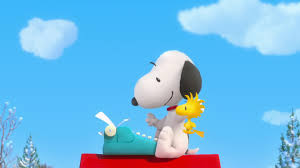
I was very wary going into this film, as it was made by Blue Sky Studios, which is not exactly a powerhouse when it comes to animation, to say the least. But The Peanuts movie is, hands down, the best movie the studio has ever made. A lot of this comes from the absurd attention to detail and dedication put into this project.
The original films always had child actors lending their voices to the characters, and The Peanuts Movie follows this tradition. All of the kids do a fantastic job reading and delivering the material. However, the filmmakers did not just hire children, but ones that actually sounded like the characters did in past iterations. The new Linus sounds just like the old one, for instance. This dedication and recreation goes a long way and provides a warm welcome for fans. Another nice addition was the voice of the late Bill Melendez as Snoopy and Woodstock. Though he died a few years back, the movie uses old voice clips from previous films, and this is a very nice touch.
The new animation style is very unique and fits Peanuts well. The characters seem like two dimensional clay-like models with three dimensional backgrounds. It is hard to describe exactly but the textures are incredibly detailed. The frame rate is another example of a little thing going very far. The movie runs at a lower frame rate than most movies usually do. This is to emulate the cartoons of old and this aspect is nailed perfectly. Blue Sky Studios has succeeded in creating a new animation style unlike any other.
The Peanuts Movie is a comedy riot. There are laughs to be had every minute and Snoopy steals the whole darn show. The comedy is clever but pure and innocent. The humor works for both children and adults and the purity of it all is admirable. The picture is absolutely hilarious with plenty of standout jokes and well done slapstick.
The music is very reminiscent of the classics as well. Listening to Vince Guaraldi's "Linus and Lucy" through the speakers easily transports you into the film. The new arrangements are also very good. But there are two modern songs thrown into the mix: Meghan Trainor's "Better When I'm Dancin'" and Flo Rida's "That's What I Like." For some odd reason, these two songs fit perfectly in their respective scenes, and I genuinely have no idea how this was pulled off.
Speaking of modern, the filmmakers handled this film very faithfully to the original material. The time period is never specified, but it feels like the 1950's or 60's. The kids all play outside, they still go to the library, Lucy still offers psychological help for five cents. The movie does not do much different aesthetically and that is commendable. The film has met with some criticism for not being ambitious or trying anything new. But think about it. The creator, Charles Schulz, passed away. Would you really want to tamper with his tried and true formula, especially without his say so? True, the film does not bring much new to the table, but it did not need to.
If I did have a major gripe with the film, it would be the Red Baron scenes. Once again, Snoopy takes to the skies and fights the Red Baron to rescue his beloved Fifi. The animation is gorgeous during these segments and the sweeping camera shows the true beauty and scope of it all. However, there are about five scenes of the flying ace and they interrupt the pacing often. The Red Baron scenes are good, but the stuff with Charlie Brown is much more interesting and engaging, so you cannot help but feel a bit annoyed whenever Snoopy flies his dog house. They often feel out of place and give the picture a disjointed feel.
The Peanuts Movie is nothing groundbreaking, aside from the fantastic visuals, as it plays out similar to other Peanuts movies. But the faithfulness and amazing attention to detail is to be admired. The voice cast is perfect, the visuals are beautiful and singular, the music is wonderfully fitting, and there is a surprising amount of emotion. The countless amount of humor makes it the funniest movie of 2015 and the jokes never get old. The film suffers from a few out place scenes, but this is a tremendous treat for both kids and adults.
Grade: A-
"Bone Tomahawk" Review
Title: Bone Tomahawk
Directed by: S. Craig Zahler
Screenplay by: S. Craig Zahler
Year: 2015
Genre blends are a tricky thing to pull off well. It is a game of high risk, high reward, and Bone Tomahawk might be one of the most interesting mixtures: a western horror. This fascinates me and is a very original idea in this day and age, where most movies are either sequels, prequels, reboots, or based on some source material. Another risky thing going against this film is having a first time director behind it. This movie is taking a lot of chances, but do they pay off?
In the small town of Bright Hope, three people are kidnapped by a group of mysterious savages. Now, the sheriff, the back-up deputy, a gunslinger, and the crippled husband of one of the abductees set out to rescue them and bring them back home.
It is always nice to see Kurt Russell in a western. He fits the setting well and Bone Tomahawk is no exception. Here he plays the sheriff, and his portrayal is very subdued. Russell is strong in the role and brings a humanity to the character of Franklin Hunt. Rocking a moustache that will put any man to shame, he leaves a great impression. Richard Jenkins is the back-up deputy. Playing a very likable character, that of Chicory, he is frantic and does not always know when to stop talking, but he is loyal to Hunt and Jenkins adds a history to the character that is not even explored in the script, which is a nice touch.
Patrick Wilson is completely compelling as Arthur O'Dwyer, whose wife has been kidnapped. He is crippled throughout the entire movie and thus he had to sell the physicality of an injured man and Wilson does so effortlessly. The passion his character has for saving his wife is the source of emotion for the picture, and Wilson is more than up to the task. Rounding off the team is Mathew Fox as John Brooder, who is the closest thing we have to a classic cowboy in this movie. He is extremely handy with a gun, runs on his own moral code, and cracks a good joke every once in a while. Fox is a joy to watch and there is a sort of mystery behind the character that makes him incredibly interesting.
Bone Tomahawk works with a minimal cast, and the rest of actors do a fine job but if there was a weak link, it would be Lili Simmons as Samantha O'Dwyer. She is actually pretty good at the beginning of the film, but during the third act, she does not emote the fear that the character should be feeling. Her third act performance is rather one-note aside from a few moments, but besides that, this is a good cast.
The story is extremely simple. People are kidnapped, they need to be rescued. It is streamlined and clear, which makes it easy to jump into and follow. The story progresses at a very slow pace. I believe it takes over half an hour for our heroes to set out on their journey. This movie is a slow burn, and is effective in this regard for the most part. The picture has a runtime of 132 minutes and that is a bit too long. There is never a dull moment, but there are a few moments that, upon reflection, were not entirely necessary.
One aspect of this film that excels is the dialogue. The characters spew line after line of interesting dialogue that adds depth to them. This is how we learn everything about them. The things the characters say are always interesting. Chicory has a very nice speech about a flea circus and his beliefs on it and the scene is very touching. Brood has an answer for everything, but my favorite has to be when he's asked why he believes he is the most intelligent of the bunch. "Sheriff Hunt has a wife. So does Mr. O'Dwyer. And you're a widower...Smart men don't get married." Great dialogue like this fuels this film from start to finish and makes the slow pace enjoyable.
I have yet to even mention the genre melding features. A western horror seems like an odd choice, and could easily just be a period horror piece. We have gotten tons of those before. But Bone Tomahawk is a western through and through. There are a few horror elements thrown in during the first act, but it is not until the third act when the horror comes in full force. These savages, known as troglodytes, are built up well in an early expositional scene, and oh boy are they scary. Their appearance is simple, but still frightening and their actions are gruesomely terrifying. We do not get to see them until the final third, but these things are terrifying.
S. Craig Zahler is a man who understands horror. Bone Tomahawk is devoid of any jump scares or other cheap horror tricks. Everything scary that occurs on screen works because of how it is filmed and executed. The Indians, which are more like cavemen actually, are usually shot from low angles to make them appear more imposing. The lighting throughout the film is usually very dark or dimly lit, especially when indoors. This is done so effectively that some of the scenes in Bright Hope have an unsettling air about them, even though nothing bad happens. The camera is often shaky, but not to the point of no clarity. It is effective as the terrain is very uneven and thus the camera follows those movements. It is a neat trick that places the audience into the movie, as the invisible fifth member of the posse.
A lot of the horror also stems from a gore factor. This movie has quite a body count and plenty of scenes are hard to watch. The climax is filled with moments that make you want to look away, but nothing compares to that scene. If you have seen this movie, you know exactly what I am talking about. That scene is probably the hardest thing I have had to watch in a film. It is the most sickening and brutal sequence these eyes have seen, and the special effects really hit home.
There is a lack of music throughout the film that emphasizes the emptiness and vastness of the landscape. However, the minimal use of music also hurts other scenes that really could have benefitted by having a composition in the background. The sound design should be given more than just a pat on the back, as they fired on all cylinders. The sounds the savages make are chilling, gunshots sound smoky (I know, how is that possible?), and footsteps are given great attention to detail. Listen closely to the sound the savages make when they walk.
There is one moment in the plot that does irk me. Late in the film, O'Dwyer obtains an item after a very tense scene. However, given what just happened to him, it is not realistic for him to go get the item. It is difficult to explain this while tip-toeing around spoilers, but once you watch the film, you will know what I mean. He had other priorities and it was impossible to tell if it was safe for him to get it.
Bone Tomahawk is a wholly original film that blends two seemingly polar genres and makes it work. The cast is superb with one minor exception, the story is simple, and the atmosphere seeps off the screen. This picture is oozing with detail and ambience, which makes it a more impactful experience. That scene is so well done and hard to watch, and might be one of the best scenes of the year. It delivers as a western and as a horror film, with very few flaws. It tends to overstay its welcome and there are one or two niggles in the plot. But aside from that, there is little to complain about. The entire third act is filled with high tension and stupendous suspense. It is nice to see another good western following Slow West, which was also done by a first time director. And if Bone Tomahawk is any indication of Zahler's quality as a director, then he has a bright future ahead of him.
Grade: A-
Sunday, January 10, 2016
"Creed" Review
Title: Creed
Directed by: Ryan Coogler
Screenplay by: Ryan Coogler and Aaron Covington
Year: 2015
The Rocky franchise is, well, a rocky one. Some films are great, some good, others not so much. These are my brief thoughts on all of them: the first is fantastic, the second is very good, the third and fourth are enjoyable (the latter being a bit underrated), the fifth pretty bad, and the sixth a nice little gem. Creed is the seventh installment in this famous franchise. Seeking to reboot it for a whole new generation, is this picture a real knockout?
Adonis "Donnie" Johnson is the son of the late, former heavyweight champion of the world, Apollo Creed. Having a natural knack for fighting like his father before him, Donnie seeks someone to train him. He decides to visit his father's former friend, Rocky Balboa, hoping to be trained by him.
I think this premise is a fantastic idea, as it reintroduces the Rocky franchise while keeping the titular character in the movie without throwing him back in the ring. Michael B. Jordan stars as Donnie and he is a revelation as the young Creed. Not only does he look like Carl Weathers, who played Apollo Creed in the past, but he also acts like the son of Apollo would. He is instantly likable, with a fiery passion for fighting and an insatiable hunger to prove himself. But while Jordan is stunning, Sylvester Stallone is shocking. Stallone brings so much heart to Rocky that you cannot help but feel for him and all he has been through. This is an aged but wiser Rocky who has lost so much but still has a positive outlook on life. Stallone's performance is Oscar caliber and will even make grown men cry. He created this character and proves that he is at his best when portraying him.
Tessa Thompson plays Bianca, Donnie's neighbor and love interest. Her character is very interesting and backed by a strong performance by Thompson. Phylicia Rashad is Mary Anne Creed and though she does not have the most screen time, she nails the scenes she is in. Though she is not Donnie's mother, she treats him as her son. Rashad is solid and it would be nice to see more of her in a potential sequel.
As mentioned earlier, I think the premise behind this movie is a smart move. The story is instantly engaging as we follow Donnie's journey towards greatness. Handled poorly, this film could have easily devolved into the audience always waiting to see more of Rocky. But Donnie is very fleshed out and not a hollow mimic of Rocky. He is his own person with completely different motivations. And having Rocky as a mentor is a nice way to pass the torch. This is not Rocky's story, and that is made very clear. This film is perfectly paced, never slowing down too much but giving the characters time to breathe at the same time.
Ryan Coogler's direction is exactly what this movie needed. It captures the essence of the franchise while also scraping it of any goofiness from some past entries. Were it not for Coogler, this picture never would have been made, as it was completely his idea. The camerawork is marvelous, with the standout being Donnie's first real fight. The entire fight is done in what appears to be one long take. And it is not just one round. The fighters return to their corners, their injuries are apparent, it is an incredible technical feat. The cinematography in general is wonderful. You feel as if you are walking down the streets of Philadelphia and for the fight scenes, the camera gets up close and personal when necessary, and pulls back for wide shots to give the audience a breather.
And I have to mention the music. Ludwig Goransson delivers a powerful and beautiful musical score. "Gonna Fly Now" gets a tremendous orchestral update and other familiar fanfares are accompanied by hard hitting compositions. For me, "You're a Creed," ""If I Fight, You Fight," and "End Credits" are exceptional standouts. Though not my cup of tea, I did find the inclusion of a few rap songs very fitting and adrenaline pumping.
The fight scenes never outweigh the drama, but damn are they good. They come across as pretty brutal this time around. Every punch feels real and the adrenaline and emotion that is felt during the best of the classic fights is present and stronger than ever. I had to resist the urge to jump out of my seat and cheer and motivate Donnie. The Rocky movies always had that magic of making the final fight so freaking engaging, and Creed is no exception.
The editing should not go unnoticed either. The training montage for this movie is well cut together, the film's pace never breaks, and scenes flow perfectly into each other. In addition, the screenplay is amazingly well written. The dialogue feels real, the interactions feel real, everything is believable. Once again, we have a good villain in the form of "Pretty" Ricky Conlan (Tony Bellew), currently the undefeated light heavyweight champion. He channels several past Rocky villains but by the end, his character actually does something that changes our perspective of him. It is done in one line but it goes a long way.
Creed is a well crafted movie and I am relieved to say that. The trailers promised something incredible and the film delivered. Filled with great performances, especially from Stallone, effective camerawork, a solid script, and successful direction, Creed more than succeeds at bringing this franchise back. It reinvigorates it and provides what is, for me, the most emotional experience of 2015 thus far. You become so attached to these characters that you will want to see them again and again. Creed delivers more than just a few punches by giving us what might be the best entry in the franchise.
Grade: A+
"Victor Frankenstein" Review
Title: Victor Frankenstein
Directed by: Paul McGuigan
Screenplay by: Max Landis and Mary Shelley
Year: 2015
Upon hearing the words "movie franchise," many will immediately think of Star Wars, James Bond, the MCU, and other big budget series. But no one ever thinks of some of the classics, like the Universal Monsters franchise. This series is actually among my favorite film franchises and it contains many hidden gems. Even though Victor Frankenstein is not part of this franchise, or even made by Universal for that matter, it captured my interest. Does this retelling of a well-known classic electrify the story with new life, or leave it on the laboratory table, lifeless?
An unnamed hunchback performs for a circus and acts as the doctor for the performers. One night, a woman is injured and together with a mysterious young man, the hunchback saves the woman's life. Impressed by his skills, the young man frees the hunchback and together they work on a project that will change science forever.
I shall begin by talking about Daniel Radcliffe as Igor because, despite what the title might suggest, Igor is the main character. It is strange to see Radcliffe in a movie that is not part of the Harry Potter franchise, but he gives a very good performance here. His take on Igor is unlike any other. This is not some strange and cooky character, but rather a man with a deformity. His portrayal is fine but James McAvoy, though not the main character, is the real star of this film. McAvoy plays Victor and he gives it everything he has. I am actually surprised with how much he brought to the role. This is the type of film where you would expect the performances to be phoned in but McAvoy is unfathomably spectacular. His performance is actually comparable to Peter Cushing's from Curse of Frankenstein.
Andrew Scott plays an investigator that acts as an antagonist and Scott just does not seem engaged. Granted, the material he is given is not very riveting, but aside from one or two scenes, he does not bring much to this movie. Scott has talent, but it does not show here. Charles Dance is Victor's father and he leaves even less of an impression. His role is so minor it might as well be a cameo and his line delivery has all the emotion of a plank of wood. Dance really did not seem to care for this project.
This is a well-known story but Victor Frankenstein decides to take a very different approach by taking some major liberties. The change is refreshing and allows for a very different version of the story. As I mentioned earlier, Igor is changed up quite a bit, there are two monsters this time, each with a very different appearance from the Boris Karloff one, and the film focuses more on the relationship between our two leads rather than the monster.
The first monster is actually very creative. It is not even human, it is composed of animal parts, which really sets it apart from any other iteration. The second however, is very underwhelming and pretty dull. I bring up these two designs because they reflect the quality of the film. For the most part, the new and inventive stuff pays off and is well done. But whenever the movie falls back on cliches or tired tropes, it becomes very by-the-numbers and even boring.
There is a relationship between Igor and the girl he saved, which is very good at first. But then the female character, Lorelei, is pretty much absent from the film and the little screen time she does have is pretty generic past the first act. The film has an interesting structure, more about perfecting the experiment and the developing relationship between Igor and Victor for the first two acts. But the third act devolves into a poorly constructed action scene. There was no need for this and really conflicts with the previous treatment of the story as something more subdued.
The music by Craig Armstrong was surprisingly good, capturing the gothic nature of the tale wonderfully. The score is beautifully composed and is a major plus for the movie. Another positive is the lighting. There were some creative choices made in regards to the cinematography, but the lighting was especially interesting, helping to keep this from being a simple retread.
The plot starts out promising enough, and there are plenty of great moments, but it ultimately suffers from a lack of focus. Some aspects of the film are brushed over with only a few lines. The villains are incredibly weak, having zero motivation, which makes them incredibly forgettable and certain plot points needed more time devoted to them. I do not want to spoil anything, but the Igor reveal that comes near the end of the second act is a perfect example of this. This plot element is glossed over with less than ten lines of dialogue when it really needed more. But one thing this film absolutely nailed was Victor's motivation. In previous films, his motivation was curiosity as well as a search for power. But here, it is so much more than that and this emotional focal point makes Victor an even better character.
Victor Frankenstein is not as bad as it could have been. I hate to use this phrase because that is how sub-par sequels are made, such Maze Runner: The Scorch Trials. But it is true. There are some fantastic elements in here, but they are weighed down with unfortunate reversions to genre cliches. The characters are well realized, with the chemistry between Radcliffe and McAvoy being really great, with the latter giving a spellbinding performance. The visual effects are good and the plot had some promising threads. But in the end, Victor Frankenstein cannot overcome its mediocrity as, by the end, it plays to audience expectations rather than surpassing them. Enjoyable at times, but forgettable.
Grade: C
Subscribe to:
Posts (Atom)


