Showing posts with label A Plus. Show all posts
Thursday, July 20, 2017
"Logan" Review
Title: Logan
Directed by: James Mangold
Written by: Scott Frank, James Mangold, and Michael Green
Year: 2017
In my opinion, the X-Men franchise has been on the upswing ever since X-Men: First Class hit theatres in 2011. I feel that First Class, The Wolverine, Days of Future Past, Deadpool, and Apocalypse are all great movies and shining examples of the comic book genre. However, the latest film in the franchise, Logan, seems to be going about things very differently, presenting itself as a hard-hitting drama much like The Dark Knight did in 2008. Is Hugh Jackman's final turn as Wolverine a sharp and fitting end, or a dull stab in a new direction?
The year is 2029, and mutants are nearing extinction. Logan has aged and his healing abilities are not what they once were. He must care for a deteriorating Charles Xavier who is slowly losing his mind. However, an opportunity to escape the world arrives in the form a little girl, Laura, who is also a mutant. With an evil organization chasing after her, the trio is now on the run, with Logan having to come to terms with his own mortality.
Before I talk about the film itself, I find it absolutely necessary to mention the trailers. Logan had a perfect marketing campaign in my eyes. Both of the trailers are two of the best I have ever seen. The scenes that were shown gave you a slight taste for the film, hinting at the tone without revealing anything major. There were no title cards or text stating how important the film was with such cliché lines like "one last time" or "his true destiny." Instead, we were shown the title and the release date, allowing for the images to stand on their own. And the musical choices were nothing short of perfect, possibly being the best part of the marketing. Flawless.
As for the film itself, Logan sets out to be a depressing and heartbreaking character piece for the Wolverine, and a sendoff for Jackman. The picture sees Logan slowly dying because his adamantium skeleton is poisoning him, while also causing a degenerative effect on his natural healing factor. This is a clever way to make an otherwise immortal character vulnerable. Also important to note is that Logan is, first and foremost, a western. The way the characters are written and the themes the film deals with are all highly common in the western genre. This is made even more apparent when the 1953 classic Shane appears on the television. Logan is very much the Unforgiven of the superhero genre, with both films sharing incredibly similar traits and subverting their respective categories.
Jackman has played the titular character for 17 years now, making this his most iconic role. This picture also marks the final time Jackman will be donning the famous claws; and what a film to end with. Jackman gives the best performance I have seen from him, overflowing with emotional resonance and undisputed commitment. His passion for playing Logan truly transcends the screen and affects the audience on a deeply spiritual level. The external notion that this is Jackman's final time playing Wolverine certainly plays a part in the film, as it immediately instills a sense of sadness in your mind. Opposite him is the esteemed Patrick Stewart, reprising his role as Charles Xavier. Much like Logan, Charles is not in the best of health, succumbing to seizures that unleash his dangerous telepathic powers. Stewart gives his best performance as the professor, emphasizing the character's grief and weariness over the current situation in a devastating manner.
However, this film also introduces us to some new characters, the most notable being Laura, played by Dafne Keene. The young Keene makes her cinematic debut in stunning fashion. The character of Laura calls for an extensively physical performance, and Keene blows this qualification out of the water. Her ability to hang with such heavyweights as Jackman and Stewart and even steal the scene from them on more than a few occasions (all without saying a single word) is beyond noteworthy. Boyd Holbrook portrays the main antagonist who goes by the name of Donald Pierce. Holbrook evokes a magnetically despicable presence that plays to the character's favor. What could have been an easily forgettable villain is instead bolstered by great dialogue and a strong performance on Holbrook's part.
James Mangold, who also directed 2013's The Wolverine, is at the helm here. You can tell Mangold's storytelling was a bit restricted in The Wolverine, mainly because of the PG-13 rating. However, with Logan, the R-rating has liberated him. I am not saying that excessive gore and profane language make a good movie, but it can certainly elevate the material, and that is exactly the case with Logan. This film is brutal in its portrayal of violence and uses swears and f-bombs naturally. This all aids in enhancing the bleak mood of the story, and Mangold has crafted quite the tale.
Taking inspiration from the "Old Man Logan" series of comics, Mangold expertly paints a gritty, dystopian future where mutants are essentially an endangered species and the familiar faces have aged drastically and tragically. The setting is a character in itself, and is an excellent backdrop for the powerful character study contained within the 137 minute runtime. The film has Logan face his impending death in a decidedly complex approach. Although he is experiencing excruciating pain, he does not care whether he dies. However, he continuously struggles to protect those few that he cares about, giving his life purpose even when he seems indifferent to his fate. Logan's mortality was certainly a focal point for The Wolverine, but here it is taken to the next level, illustrating the character at his most vulnerable yet also at his most ferocious. The savagely hypnotic action sequences are perfectly juxtaposed with the slower, poignant character moments.
This movie is very much about the smaller moments. Moments like when Charles and Logan are discussing family, and the former repeatedly asks "What did you do?" or when the main trio is having dinner with newfound friends and all three are smiling (a rarity in this film) are minor scenes but muster up a massive presence. Instances like these where not much is said but so much is conveyed are abundant throughout the picture. There is definitely a hefty amount of dialogue, but Logan prioritizes visual storytelling and its characters over all else. You know you have a gripping story when the characters and plot are more impressive than the action, which is nothing shy of excellent by the way.
The film has the appropriate amount of action scenes; enough to satiate the audience, and enough so that they do not overshadow the story. The movie opens with Wolverine tearing down some thugs in cold-blooded and bloody glory, immediately setting the stage for future fights. Later on, there is a well-handled and white-knuckled car chase. But the action highlights are when Wolverine goes into berserk mode and shreds everyone in sight, especially when teaming up with the young Laura, who shares his mutation and badassery. Another aspect I wish to compliment is the variety of the action; no two sequences are alike, which helps keep the kinetic beats fresh and interesting.
This movie prides itself on its dramatic story and underlying emotions, and rightfully so. Without question, Logan is the most emotionally resonant superhero film made to date. The relationships between the characters and the tragedy visually told in the backgrounds is all masterfully evocative. Do not be fooled by the label "superhero movie" or "comic book film"; this picture is tearjerking when it wants to be. It will punch you in the gut and then twist unflinchingly. The film aims to be memorable in powerful ways, and not a single misstep is taken in achieving that goal.
One benefit of posting this review quite late is that I am able to comment on the black and white version of the film known as Logan: Noir. In short, it is even better than the original. This version is drenched in a chrome coating that emphasizes the desolate landscape and dismal tone even more than the colorized format did. The lighting also seems to receive an upgrade, being much more noticeable and more indicative of certain themes, as well as just making the film look absolutely gorgeous. Certain scenes even feel completely different despite being unchanged. This desaturated variant of the film is better in every regard, with one exception. The blood in the action sequences is not as noticeable, making them only slightly inferior to those in color when it comes to showcasing brutal violence. But I think it is a worthy compromise.
No doubt followers of mine have gotten tired of my repeated use of this phrase over the past few years, but Logan truly is one of the best superhero films ever made. Last year, I gave Captain America: Civil War the distinction of being in the top three of the genre. But I must revoke that title and award it to Logan instead. This picture has wonderfully three-dimensional characters; outstanding performances; an impactful and appropriately depressing story; beautiful cinematography and fitting music; spectacularly bloody action sequences; an ethotic presence unlike any other film within the superhero genre; and sends off Jackman and Stewart on the highest of notes. This is not only a brilliant example of what the comic book genre is capable of, but also a fantastic western in its own right. A triumphant masterpiece.
Grade: A+
Wednesday, January 4, 2017
"La La Land" Review
Title: La La Land
Directed by: Damien Chazelle
Written by: Damien Chazelle
Year: 2016
Damien Chazelle's Whiplash is an extraordinary film and my pick for the second best movie of 2014 (behind Birdman). His passion for music was clearly present in that film, and seems to reappear in his sophomore directorial entry. Does La La Land hit all the right notes, or is it lost in its own world?
Aspiring Hollywood actress Mia meets aspiring jazz pianist Sebastian. The two hit it off really well and explore each other's passions. However, as the two begin to fall in love, they find out that making it in the City of Stars is more difficult than they anticipated.
Emma Stone has established herself as a world-class actress, and the full scope of her talent is brought out in this movie. She excels in evocative roles, and so the character of Mia serves Stone's strengths. She is allowed to fully run the gamut of emotions to astounding effect. Stone also proves to be a fabulous singer and dancer. Her high-pitched yet soft voice is borderline angelic, yielding wonderful results. Ryan Gosling floored me with his outing in The Nice Guys earlier this year, and he managed to stun me once again in this film. Gosling has quickly become one of my favorite actors working today, and his performance in La La Land confirmed it. He has a tremendous amount of charisma and gravitas about him that translates well to the big screen. His singing capabilities are pretty darn good and he has impeccable comedic timing.
La La Land marks Gosling and Stone's third collaboration with each other. The two have a spellbinding chemistry that radiates off the screen gorgeously. The lively relationship between their respective characters is nothing short of charming, which makes the film all the more enthralling. Gosling and Stone are looking at some serious award consideration for their ardent performances. They both give it their all and fully commit to the film.
Although La La Land rises on the strength of its protagonists and performances, it has so much more to offer than just that. Whiplash was a showcase of passion and determination, and the same can be said about Chazelle's latest. The story is about two people who are vehement about their art and searching for success in an unforgiving business. Mia knows all about Hollywood, with classic movie posters adorning her room and a wealth of knowledge about all the old films. Sebastian knows everything there is about jazz, which is illustrated incredibly when he gives Mia a play-by-play of a jazz performance. Watching these two chase their dreams while also falling in love is indescribably pleasing.
Mia and Sebastian's romance brings them the happiness that they have been lacking, which is so wonderful to watch. Whenever one of them fails to reach their goal, the other is always there for support. This relationship stands upon a foundation of mutual respect and the adoration of fanaticism. The entire film hinges on the development of this romance, and it is difficult not to become fully invested in it. You grow to love the characters and sympathize with their struggles. But what works best about this romance is how they throw themselves into each other's passion. Mia wants to learn about jazz and understand it the way Sebastian does. In concordance, Sebastian admires Mia's love for film and acting, even taking her to the planetarium featured in Rebel Without a Cause.
La La Land is presented as a love letter to classic Hollywood. Though it is set in modern times, the film is brimming with references and nods to old films and traditional American filmmaking techniques. This is evident from the very opening of the film, which is a title card that states the movie was filmed in CinemaScope. CinemaScope was a specific lens used primarily during the 1950s to shoot films in wide screen and present them as massive spectacles (like musicals). As a result, La La Land looks fantastic, with the widescreen approach contributing to the vibe of the picture. The musical segments look especially great, with grand sweeping shots and all of them seemingly done in one-take, which is a callback to the musicals of old.
The movie is oozing with references to Hollywood paradigms such as The Black Cat, The Wizard of Oz, and Casablanca. There are old movie posters that decorate the backgrounds of many sets, mentions of American favorites, and even the ending title card screams Golden Age Hollywood. In addition, some of the story elements mirror cinematic classics. The two main characters do not like each other at first, but slowly warm up to one another, which is reminiscent of the relationship between Don and Kathy in Singin' in the Rain. In fact, most of the inspiration for La La Land comes from Singin' in the Rain. A lot of the musical sequences bear resemblances to those of the 1952 film, with the Epilogue being a parallel of the Broadway Melody Ballet, for instance. Gosling even swings from a lamppost in a similar fashion to what Gene Kelly did while singing the titular song of the darling musical.
Damien Chazelle is rapidly turning into one of the strongest forces in the industry. Whiplash, his first feature-length film, was nominated for Best Picture at the Academy Awards (along with a few other awards), which is damned impressive. La La Land is another triumph for the young director. Chazelle has undeniable talent, and it would seem his passion for music is as large as his love for film, particularly jazz. His idea to film this like a 1950s production, going even so far as implementing an anamorphic lens that has not been used since 1963, was an inspired choice. Chazelle's vision of Los Angeles is highly romantic, as he makes it look like the most colorful and beautiful place on the planet. But what really shocked me was how he filmed the indoor musical sequences. The sets are constructed in such a way that they are believable but also serve for free movement of the camera. This allows for stunning long takes and fluid cinematography, the likes of which I have rarely seen.
I think I have danced around the topic long enough, so it comes time to discuss the musical aspect of the picture. We have not had a musical of this kind for quite some time now. La La Land shows us why this genre needs to continue; it brings us happiness. The song-and-dance sequences are all spectacular. The film opens with a cheerful song on the highway that immediately sets up the location, the tone, the style of music we will be hearing, and the genre masterfully. The choreography is outstanding and the music is extremely delightful. Some of the dances take inspiration from Busby Berkley's style, which came to prominence in the 1930s with films like The Gold Diggers of 1933. Berkley was known for choreographing musical numbers where the space expanded beyond its boundaries within the diegesis. For instance, a small stage would somehow become much larger and feature huge set pieces and props, and at the end of the song would become a small stage once more. This is most obvious with the scene at the planetarium, where Mia and Sebastian begin dancing in space.
The dance sequences are splendidly filmed, dripping with style and elegance. The opening number takes place on a Los Angeles highway, which is not very pretty, but the song makes the dull environment come to life with a perfectly executed dance to go with it. I also love the commentary presented in the scene. There is a tracking shot that shows us all the music being listened to in each car. The songs all sound the same and the simplicity of the camera emphasizes how mundane and repetitive music has become. Then suddenly, someone bursts out singing, freeing themselves of the monotonous tunes. But the best dances are most likely the abstract ones. The Planetarium and Epilogue sequences are mesmerizing, with a vast array of colors and sweeping music, coupled with an immense amount of creativity. The way the settings ebb and flow and change and transition is absolutely alluring.
The music itself is rooted deeply in jazz. The unpredictable genre is exceedingly suitable for the film, with each of the tracks being a standout. The lyrical songs are all fabulous. I still cannot decide on a favorite. "Another Day of Sun" and "Someone in the Crowd" are incredibly gleeful and catchy, able to put a smile on anyone's face. "A Lovely Night" and "City of Stars" are the sublime duets that illustrate the characters supremely. And "Audition (The Fools Who Dream)" is so tragically performed but conveys such a sensational message, and the blend of these two approaches results in a heartbreaking yet heartwarming ballad that defines the movie accurately.
There appears to be a common theme present in both of Chazelle's films; you should always maintain passion for your art, no matter what others might say. This movie has a remarkable quote on the subject. "People love what people are passionate about." This is very true and will resonate with many viewers, myself included. La La Land is flat-out terrific. Gosling and Stone are at their best; the story is consistently engaging; the emotional core grips you; the old-fashioned style gives the movie a unique feel; and the musical numbers are all glorious. The bittersweet ending is also the perfect note to end on. On the one hand, the audience is given what they want so they will be happy. But on the other, they are deprived of something, which will allow this film to marinate in their minds and sit in their memory longer. Even the title is perfect, referring both to Los Angeles and the world the main characters get lost in as the romance between them grows. Chazelle is proving to be more than a director; he is the auteur of his projects. La La Land resurrects the classic musical with style and class. Everyone should go and see this magnificent motion picture.
Grade: A+
Tuesday, December 20, 2016
"Rogue One: A Star Wars Story" Review
Title: Rogue One: A Star Wars Story
Directed by: Gareth Edwards
Written by: Chris Weitz and Tony Gilroy
Year: 2016
Star Wars: The Force Awakens proved that Star Wars is back and still kicking. The seventh installment in the beloved franchise did massive numbers at the box office and set the stage for a bright future. But this film will be the first to veer off the episodic series as an anthology story. Does this film find success in going rogue, or should we abandon all hope?
Set prior to the events of Star Wars: A New Hope, the Rebel Alliance has discovered the creation of a planet-killing space station; the Death Star. It is up to a small band of Rebel spies to steal the plans to the deadly weapon, in the hopes of finding a weakness.
Let us get this out of the way first. No, Rogue One: A Star Wars Story does not feature an opening crawl nor the familiar fanfare at the beginning. If any Star Wars movie needed an opening crawl text, it was Rogue One. If you have not read the most recent canon novel, Catalyst by James Luceno, which ties into this movie directly, you may find yourself a bit lost at the start. The book explains the relationship between Galen Erso and Orson Krennic. Also, if you have not watched the animated television series The Clone Wars, then you will be unfamiliar with the character of Saw Gerrera. The omission of the opening text was an attempt to further separate this film from the episodic releases, which I feel was a mistake. The movie should be able to set itself apart on its own merits, with the traditional Star Wars opening linking all the installments. The incorporation of a crawl text could have gone a long way to summarize Catalyst and introduce Saw Gerrera for the casual fans.
Felicity Jones has been getting a lot of work recently (deservedly so) and is the star of this picture. Jones is fantastic as the tough and independent Jyn Erso. She has a remarkable screen presence that is backed up with a layered performance. Jyn is a sensationally realized personality that anchors the film with a good character arc. Diego Luna plays Cassian Andor, a Rebel captain. Luna contributes a necessary sense of authority to the role, making Cassian a memorable and important character. The performance-sparring between Jones and Luna is captivating and highly animated, coming across as one of the film's greatest strengths.
Mads Mikkelsen is very good as Galen Erso, Jyn's father. He is quite the tragic character and if you have read Catalyst, your understanding of Galen is further enhanced. Ben Mendelsohn is perfectly over-the-top as Director Orson Krennic, the main antagonist of the piece. He is appropriately cold and chilling, as well as bombastic at points, channeling the traits of several James Bond villains. Forest Whitaker is great as Saw Gerrera, who is very different from when we saw him last in The Clone Wars. Saw has seen better days, and Whitaker's raspy line-delivery adds a history to the character.
The plot is based on one sentence that appears in the opening crawl for A New Hope. "Rebel spies managed to steal secret plans to the Empire's ultimate weapon, the DEATH STAR..." Rogue One tells the story of the rebels that stole those plans. The plot is inexplicably riveting, partly because of how well-told the story is and partly because of how integral this event is in the Star Wars mythos. The amount of care placed to ensure not tampering with the established history of the universe is on full display. For the first half, Rogue One moves at a slower pace than most other films in the franchise, which is not a bad thing. But once the third act rolls around, the picture becomes an energetic and explosive thrill ride that will leave you short of breath until the very end.
Gareth Edwards did a phenomenal job directing this feature. He simultaneously captured the spirit of Star Wars while also creating a film that is very different from the other entries in the series. Rogue One fits into the saga perfectly, but sticks out through its tone and visuals alone. The cinematography is stellar, especially during the battle sequences. A great deal of the picture has the heroes confined to small spaces, which allows the camera to get up close, thus producing intimate shots of the characters that resonate with the audience. For the battles, the cinematography elicits a tremendous sense of scale. For instance, the AT-ACTs are mainly shown from low angles, which emphasizes their towering size and immense power over the ground troops. The lighting throughout the film is brilliant, with beautiful hues adorning each set piece.
While on the subject of battles, I can definitively state that Rogue One delivers on the war aspect. The small skirmish on Jedha is wonderful fun, but only a small taste of what is to come. The third act is where the real action is. The battles are grand and epic, but also dirty and graphic. War imagery is abundant within each frame. The Force Awakens lacked any space combat, but Rogue One certainly fills this gap with one of the greatest space battles ever put to film, rivaling the one from Return of the Jedi. As a whole, the final act of this picture is outstanding, exciting, and unforgettable.
For the majority of the year, The Jungle Book has been my pick for the best visual effects of 2016. Now, Rogue One has stepped up to contest that title. The visual and practical effects in this film are nothing short of stunning. The space sequences are vivid, the AT-ACTs look terrific, and the surrounding environments are gorgeous. The production values are impeccable, which is apparent simply by looking at the sets. The universe feels lived-in, kind of rustic, harkening back to the original trilogy in a faithful manner. But what really steals the show on the technical side of things are the performance capture characters. I already touched on Tudyk's K-2SO, which looks excellent. But there are several other characters that alone rival the visual effects used in The Jungle Book.
The music by Michael Giacchino has been the source of much controversy. Firstly, this marks the first time a Star Wars film has not been scored by John Williams, who is responsible for the iconic music that defines the franchise. Secondly, due to complications, Giacchino was brought on to the film very late. As such, he was only given four and a half weeks to compose the score for the entire picture. I think the music is marvelous, and not just relative to the time frame that Giacchino was given. Familiar motifs and themes are scattered throughout the soundtrack, but most of it is original. I believe it depicts the Star Wars universe very well and underscores the themes powerfully. Though not the best or most memorable of all the Star Wars scores, it is certainly worthy of the monicker and I would really like to see Giacchino return. I would want to see what he can really do when he is given ample time.
Darth Vader has been teased from the very inception of the film. The galaxy's most feared Sith Lord and one of the greatest cinematic villains of all time returns for this latest installment. James Earl Jones reprises the voice role and he sounds magnificent. You can tell that Jones' voice has changed a bit over the years, but he is undeniably Darth Vader. As for the character, he is used sparingly in the film. Vader appears in two scenes. While I definitely wanted to see more of him, because who knows if they will be able to bring him back for another movie, the scenes that we get are awfully satisfying. Vader was used economically, which works well because he is not the main villain. He is a key player in the story, but the focus is never on him, which was a smart move on the filmmakers' part.
Now for potential flaws. I say potential because it all depends on how closely you follow the Star Wars universe. The beginning sequence with Galen and Krennic can throw many viewers off because you can sense so much unexplored history between the two. The lack of an opening crawl actually does affect this scene, which could have been set up so easily with the iconic floating words. If you have read Catalyst, then this will not be a problem as you understand the full backstory. Also, upon first viewing, I found the main band of rebels to be a tad underdeveloped, with the exception of Jyn and Cassian. I felt that the film could have explained more about who they are, where they come from, and why they are fighting. Finally, when the title of the film appears, the font used is horrendous. It fails to promote the epic nature of the diegesis. This is a minor nitpick, but it does standout.
Having said all that, a second viewing actually benefits this movie. The lack of a crawl and the terrible title card are things that cannot be changed. But the flaws I mentioned earlier seem to have been rectified. For my second viewing, I paid special attention to the music and dialogue, the latter of which fixes my issues with the film. By focusing on the lines spoken from the characters, you receive all the information you need. The discussion between Galen and Krennic in the film's opening tells you all the important information from Catalyst, thus preventing the alienation of those who have not read the book. By listening to every line the rebels say, you will understand everything you need to know about them, like their backstories. As a result, the flaws I mentioned earlier are not flaws at all, but rather proof of a tightly written script where every line is imperative to either the plot or the characters. Every word is relevant. Rogue One trusts its viewers to pay attention and pick up on all the little details, which is admirable but will surely go over the heads of many.
*SPOILERS AHEAD* As expected, the movie contains plenty of fan service. Saw Gerrera is one of the most prominent examples of it. Though not a terribly important or fan favorite character, it is nice to see that the filmmakers want to reward those who have stuck with the franchise and have watched The Clone Wars. In concordance, there are a few treats thrown in for those who watch the show Rebels (which I highly recommend for any Star Wars fan). Over the loudspeaker at the base on Yavin 4, you can hear General Syndulla's name being called. This could either refer to Hera Syndulla or her father Cham Syndulla, but I am strongly leaning towards Hera, who serves as the team's pilot in the show. Speaking of which, Hera's ship, the Ghost, makes several appearances. You can see it at the Rebel base as well as during the space battle near the end. Finally, the grumpy but lovable astromech droid Chopper makes a cameo in the film.
*SPOILERS AHEAD* Similarly, both the original Red Leader and Gold Leader were brought back during the space battle with unused footage from A New Hope. In addition, we are finally given an explanation as to why Luke was Red 5 even though he was a new recruit and there were numbers beyond his. It is because the Red 5 that came before him died during the ending space battle, thus leaving the call-sign open. C-3PO and R2-D2 make a quick cameo at the Yavin base, continuing the tradition of their being in every film of the franchise. There is a quick mention of the Whills, which is what Chirrut and Baze are protecting. In the early drafts for A New Hope, part of the title and the film included something called the Journal of the Whills, which is like the Jedi bible. Dr. Evazan and Pondo Babba also appear, giving Jyn a little bit of trouble. The movie also seeks to resolve a long-standing issue with many fans. Why was the Death Star so easy to blow up? Because Galen Erso rigged a trap so small the Empire would never find it. He made it so that one blow to the exhaust port would cause a chain reaction that would cause the battle station to explode. Things like this actually improve the original trilogy.
*SPOILERS AHEAD* Many speculated that the main characters in this film would die by the end because we never see nor hear of them in the original trilogy. Surely enough, that happens. I must applaud Disney for allowing this type of ending to take place despite their public image. It fits the story perfectly and leaves a lasting impact. Speaking of lasting impacts, Vader certainly leaves an impression. His first scene with Krennic appears to take place on Mustafar (suspiciously the only planet that is not accompanied with introductory text). His entire introduction reminds us why he is to be feared, despite his physical vulnerabilities. This is illustrated by first showing him outside of his armor and in a bacta tank, which is then followed by a glorious entrance that highlights his imposing stature. Many are divided on his "choking" pun, but I personally loved it.
*SPOILERS AHEAD* But the scene that everyone will be talking about is his ferocious attack on the Rebels after they obtain the plans. The camera complements the villain splendidly. The lights go out, the hallway is dark, and all you can hear is the trademark breathing. A red lightsaber is ignited and suddenly the room is tinted with an ominous red hue. Vader effortlessly blocks the blaster shots and uses the force and his lightsaber to murder all the Rebels in such creative and badass ways. The whole time he is walking forward, never stopping nor changing pace. This depicts him as an unstoppable force of nature. This scene belongs in a horror movie, as it truly is terrifying, especially the way the Rebels are screaming. I could gush about this sequence all day, but I will keep my thoughts brief. This scene is like a piece of candy; short but sweet. Very, very sweet.
*SPOILER FREE* All in all, I think Rogue One: A Star Wars Story is a triumph for the Star Wars franchise. It seamlessly fits into the series while also offering slight details that enhance the original trilogy. The cast is fantastic, with Felicity Jones providing a poignant performance; the story is thoroughly engaging and interesting; the characters are wonderful; the fan service is in full force (without detracting from the film); the action is beyond thrilling; the visual effects will leave you astounded; the music is suitable; and the third act will blow your mind. The potential flaws I mentioned earlier really depend on the viewer. For me, as someone who has read Catalyst and has watched both the canon television shows, I was never lost. I could see people who are not as in-tune with the franchise being a bit confused, but only if they do not pick up on the implicit dialogue. I must stress that Rogue One goes to great lengths to include all of its viewers in the adventure; one need only listen attentively. This film is appropriately dark, gritty, and a shade violent. This is an enthralling and thrilling spectacle with engrossing themes at the forefront. For me, Rogue One is better than last year's The Force Awakens (which I loved), placing it right beside the original trilogy. The film perfectly leads into A New Hope and enriches the experience. The force is strong with this one, so do not miss it.
Grade: A+
Tuesday, December 13, 2016
"Hacksaw Ridge" Review
Title: Hacksaw Ridge
Directed by: Mel Gibson
Written by: Andrew Knight and Robert Schenkkan
Year: 2016
So while the previews before this movie were playing, a gentlemen sat next to me and asked me what I knew about this movie. We got to talking and he told me that a few days earlier, he came to the theatre with his family to see some animated movie (I suspect Trolls). He became so fed up with it that he walked out and snuck into Hacksaw Ridge, catching the last half hour. He was so impressed that he returned to watch the movie in full. Just a funny story I thought I would share. Does Hacksaw Ridge signal a return from Mel Gibson, or is this a rough and rigid feature?
Desmond Doss decides that he wants to enlist in the army because he feels it is his duty as a citizen of the United States. However, he refuses to use or even touch a gun, as it contradicts his beliefs. After much adversity, he is given permission to enter the battlefield as an unarmed man. But how will he fare in the war without a weapon to defend himself?
Andrew Garfield has proven to be more than just a capable actor, most famously in The Social Network. I am here to tell you have not seen anything yet. Garfield is absolutely stellar in this movie. In this performance, he walks a fine line between heart-warming and heartbreaking, hitting both extremes with the most powerful of emotional punches. I believe he has several Best Actor nominations coming his way, and deservedly so. But equally great is the supporting cast that surrounds him. Teresa Palmer, though not in the movie too much, does a great job portraying Doss' love interest, and Sam Worthington is better than expected as a fellow soldier in Doss' division. The numerous soldiers that accompany Doss on his journey are all terrific and memorable, allowing the audience to get emotionally attached to the characters.
But the two supporting actors that stand out the most are Vince Vaughn and Hugo Weaving. Most people are quick to dismiss Vaughn as a one-act-man, and perhaps that has been true of him over the past years. But Vaughn is splendid in this picture. He makes for a perfect drill sergeant, barking orders and imaginative insults with gusto and conviction. This is a surprising turn from Vaughn, giving one of the standout performances in a film filled with standout performances. But Hugo Weaving is not to be ignored, as he might have been the best of them all. Weaving is not heavily featured, but his scenes are grounded and showcase the realities of the postwar mentality. His emotive performance as Doss' father is suitably complicated yet understandable.
The first act of the film focuses on Doss' life before joining the army. He is the nicest, most sincere person you could ever meet. His initial interactions with Palmer's Dorothy Schutte are genuinely sweet and adorable. And the way he talks about joining the army comes across as a self-imposed obligation that originates from the best of intentions. All of this allows us to cling onto his character and make us feel for him during his hardships. And when I say hardships, I am not referring to the war, but rather the way he is treated during his training. The other recruits disrespect him, insult him, and frequently beat on him because of his views on guns. Even when he is presented with the option to leave, Doss decides to stay. Stories like these resonate with audiences because we all wish we had that inner drive to never give up, no matter how much adversity is thrown our way.
Once the story approaches the actual war, the picture becomes an entirely different beast. The depiction of battle is beyond gritty and realistic. It transcends the silver screen with ferocity and relentlessness. It is beautiful and harsh at the same time, pulling no punches. The climax of the movie is how Desmond Doss saved so many lives while trying to secure Hacksaw Ridge. This extended sequence is magnificent and moving. It is wrought with tension, sentiment, and heart.
Mel Gibson's direction is marvelous and the inspiration is oozing off the screen. The manner in which he captures and displays battle scenes is breathtaking, both in its violence and its elaborate execution. Gibson seems to channel his inner Akira Kurosawa in this picture when filming the action scenes. In his films, Kurosawa would use slow motion not to emphasize the protagonists' actions and how cool they look, but rather to amplify the violence that permeated his films. In Seven Samurai, Kurosawa would show the samurai in real time, but would often employ slow motion when showing the deaths of the pillagers. Gibson uses similar techniques in Hacksaw Ridge, which yield astounding results.
The music cannot be overlooked either. Rupert Gregson-Williams has constructed a score that spotlights the emotional moments with integrity and power. In classic Hollywood fashion, there are scenes that linger on characters' faces, allowing the music to swell up and take over the scene, overwhelming the audience with tracks that will certainly elicit an emotional response.
Hacksaw Ridge is an awe-inspiring and extraordinary motion picture. Andrew Garfield gives the performance of his life, with Vaughn and Weaving on the same level; the story is engrossing and worth knowing; the battle scenes are masterfully visualized; Gibson's direction is remarkable; and the music perfectly accompanies the film. Hacksaw Ridge is one of the year's finest films, containing some of the best performances and sequences as well. I implore you to go see this film, as it will be a tear-jerking, heart-warming experience you will not soon forget.
Grade: A+
Sunday, May 29, 2016
"The Nice Guys" Review
Title: The Nice Guys
Directed by: Shane Black
Screenplay by: Shane Black and Anthony Bagarozzi
Year: 2016
The trailers for The Nice Guys do a great job at making this film stand out amongst all the sequels, prequels, reboots, remakes, and "based-on" films. The originality and 1970s setting come across well from the marketing and certainly had my curiosity from the very first trailer. But does this film deliver on the promise of its exceptional promotional material?
In 1970s Los Angeles, a private detective and a freelance enforcer must team up to investigate the death of a porn star. Their main lead is a woman who has mysteriously vanished, and they must find her before she is captured by the wrong party.
During a time when the film industry is filled with endless comic book adaptations, biopics, sequels, and the like, it is quite refreshing to get films like Hail, Caesar!, Keanu, and now The Nice Guys. This is a wholly original story and it feels great to say that. The time period also helps to distinguish this picture from the numerous other releases of the year.
The team-up between Ryan Gosling and Russell Crowe is the main drawing point of The Nice Guys, and the chemistry the two have together is criminally good. Gosling is playing a very different role from his repertoire. Instead of a suave charmer, we have a bumbling yet capable detective. Gosling is gripping as the character, executing the humor and cockiness with perfection. Crowe is equally good in a more nuanced and quieter role, which is ironic since he is character is much more physical. Crowe is captivating as a potentially violent but strongly reserved detective, and his calm demeanor enhances the effect of his comedic lines. The way Gosling and Crowe go back and forth with one another is absolutely hypnotic. I could watch a feature length film of these two having a heated conversation.
Gosling's character has a daughter, played by Angourie Rice. She gives an endearing performance and handles the mature content and material surprisingly well. Her character occasionally helps the two detectives and she is a joy to watch. Also in the film is Matt Bomer, and I am glad he is making his way into more films. He was excellent in the television series White Collar and he is very good here as well. Bomer is creepily menacing and he seems to be having plenty of fun with his role. The rest of the cast is great for the little screen time each member has.
The Nice Guys is a nice blend of a buddy-cop comedy and a neo noir thriller, striking a remarkable balance between the two. The chemistry between the two leads and the humor contained within the film deliver the former, and the direction and script deliver on the latter. This really is a good old fashioned mystery, albeit with plenty of explicit adult content. You have murder, missing people, shady locations, shadier characters, it is all here on tremendous display.
The script by Black and Bagarozzi is incredible. The writing is slick and cunning, feeling unique but not fake. I honestly believe that this script could not have been improved. The writing has been revised to perfection, without a line out of place. Powerful and witty dialogue backed by great performances propel the plot. This is quite a quotable film, with Gosling's character spewing out some truly phenomenal phrases.
This picture has a very engaging story filled with plot twists and interesting mysteries. One thing leads to another in clever and sensical ways and the mystery is spread out very well throughout the film's runtime. Why was this porn star murdered? Who is Amelia? Why was this burned? These are all questions that keep the audience invested in the story. The film provides consistent thrills and laughs that mix together nicely. There are also many instances of misdirection that keep the audience on their toes. The Nice Guys does a good job at playing with viewers' expectations and throwing plenty of curve balls. This is the type of film that directs the audience's focus.
Speaking of direction, Shane Black is firing on all cylinders from the director's chair. Despite this film not taking place during Christmas, Black's fingerprints are all over this project. His style of writing and creative camera movements are prominent throughout this movie. The Nice Guys demonstrates the witty humor that Black has become known for and it is one of the brightest spots of this film. The Nice Guys is a hilarious motion picture that bounces between raunchy jokes, grotesque humor, and rapid-fire one-liners with ease. This film will leave you grinning from ear to ear.
The way the 1970s is captured in this picture is outstanding. The setting itself feels like its own character. The colors are very vibrant, especially during the night scenes. It feels as if this is a movie that was released in the '70s. This is simultaneously a dated film and a fresh new movie.
There is also a surprising amount of action, mostly in the form of shootouts. The action and chases are all helmed very well. The filming of the action sequences is terrifically done and they are edited very well, never leaving the audience behind. These scenes are stacked with tension as well as humor. The plot MacGuffin that is being chased during the final act is utterly hilarious and ridiculous, but it works with the tone that the film has established.
The Nice Guys is a film that deserves to be seen. This is a quality picture with two extraordinary leads, a solid cast all around, wonderful aesthetics, an engaging story, and gut-busting humor. Gosling and Crowe are an unlikely pair but they work off of each other as if they have been working together for years. The two detectives also receive plenty of development, and even the daughter has an emotional plot thread all to herself. The mystery is both ridiculous and thrilling, all starting with the death of a porn star. Shane Black's stamp is clearly on this film and it is all the better for it. The Nice Guys is an odd summer film, in that it is not a big action blockbuster. But that helps it stand out even more. This is a magnificent film, so do not allow it to slip under your radar.
Grade: A+
Wednesday, May 11, 2016
"Captain America: Civil War" Review
Title: Captain America: Civil War
Directed by: Joe Russo and Anthony Russo
Screenplay by: Christopher Markus and Stephen McFeely
Year: 2016
The Captain America films are interesting in that they seem to set up the big events or include major events. Captain America: The First Avenger introduced the tesseract; The Winter Soldier showed the fall of S.H.I.E.L.D.; and Civil War presents the rift that divides the Avengers. Does Civil War deliver a franchise-changing story, or is it a forgettable and uneventful entry?
Following a mission during which the Avengers caused some casualties, the world's leaders believe the Avengers have operated without authority long enough. A document is proposed whereby the Avengers operate under the government and can only act when allowed. Iron Man takes the side of the Sokovia Accords, believing the heroes need to be put in check. Captain America however believes the Avengers should act on their own. As the arguments rise, so do the separations, which leads to a battle that may change the team drastically.
Civil War features a huge cast, filled with both old faces and new. But this is still a Captain America film, so it is only right to begin with Chris Evans. Evans has made this character his own. He is a revelation in the role and sells Steve Roger's morals and standpoints with conviction and ease. The same goes for Robert Downey Jr. as Tony Stark/Iron Man. Tony is the character that has changed the most over the course of the Marvel Cinematic Universe and Downey has adapted to each stage of Tony's life. He nails the big dramatic moments as well as the smaller more nuanced moments. And when Evans and Downey are on screen together, the chemistry is electric. You do not see the actors, you see the characters. What is interesting is the sides the characters take. If this were Iron Man and Captain America from their first films, they would be on opposite sides. But because of what they have gone through and how they have changed, they take sides that illustrate their evolution as characters. Evans and Downey command the screen, but equally impressive is the cast that surrounds them.
Sebastian Stan returns as Bucky/Winter Soldier. His character is vital to the plot and Stan gives a performance equal in quality to his importance in the story. Anthony Mackie is really good as Sam Wilson/Falcon. The character's relationship with Steve Rogers comes down to Mackie's acting, and he does a damn fine job. He is also very entertaining when acting with Stan, as their characters share some great moments. In Avengers: Age of Ultron, we did not see much of Elizabeth Olsen as Wanda Maximoff/Scarlet Witch. However, in this film, Olsen truly comes into her own. Wanda is actually a rather important character in the film and Olsen brings powerful emotional stakes to the character. Jeremy Renner is as good as ever as Clint Barton/Hawkeye. In addition to having some good quips, his stakes and responsibilities in the film are very well done. Paul Rudd reprises his role as Scott Lang/Ant-Man from last year's picture. Rudd is hilariously charming in this movie. Every line he has has been perfectly written for the character and some of the biggest laughs come from him.
Some of the smaller roles in the film include Thunderbolt Ross, Agent 13, and Everett Ross, played by William Hurt, Emily VanCamp, and Martin Freeman respectively. It is nice to see Hurt return, further implementing the happenings of The Incredible Hulk into the MCU and he does just as good a job as he did in that film. VanCamp has an interesting role, playing both Captain America's love interest and his informer. She does a fine job and we will probably see more of her. Freeman adopts an American accent this time around and though he is not featured heavily in the film, I get the feeling we will see more of him in future installments. So far, he has left a good impression and I am curious as to how this character will be handled.
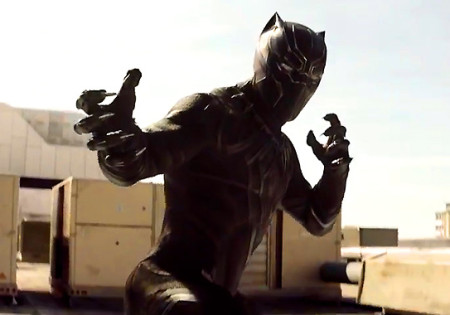
Now for the newcomers. Chadwick Boseman plays T'Challa/Black Panther and he owns the role. He has a captivating presence and T'Challa's motives come across so well because of Boseman's performance. As for the character, Black Panther was portrayed perfectly. He moves silently but quickly. His fighting style is very much like a dance, done with tremendous grace and accuracy. But I will touch more on the action later. Tom Holland makes his debut as Peter Parker/Spider-Man and he absolutely nails the role. It feels as if Peter Parker has walked right out of the pages of the comics and into this film, and most of it comes down to Holland's performance, in addition to the script. It is too soon to say whether he is the best on-screen Spider-Man we have had, but Holland is off to a tremendous start. I will also say that this is the Spider-Man we have all been waiting for, and the bar has been set high for the standalone film.
One of the greatest factors of this film is how it presents both sides of the debate. Captain America argues his side with unwavering conviction, doing what he thinks is best for team and for the people they protect. Iron Man feels guilty for what happened in Sokovia, seeing as how he helped create Ultron. He feels accountable and believes that the Avengers need to put in check so that they do not go too far again. Furthermore, not only is each side represented equally well, but your allegiance will most likely change throughout the film. No matter whom you side with walking into the movie, do not be surprised if you begin to switch sides multiple times as the film plays out. But the brilliance of the film is that it does not favor one side. It presents the audience with the viewpoints and allows them to decide, which not only makes for a more personal and enjoyable time, but also ensures a different viewing experience upon re-watching the movie.
One of the strengths of the MCU is how well it handles its characters and that carries over into Civil War. For the most part, the characters are what drive the films toward success because they are loved by fans. The writers know how to craft each person's dialogue to match their personality. For Civil War, if you were to take a look at the script with all of the names blocked, you would most likely be able to identify who said what line. This is a major credit to the screenwriters because it demonstrates how well defined the characters in the film are. Even newer characters such as Ant-Man, Black Panther, and Spider-Man are given such incredible attention during the writing process that they are given perfect dialogue for their characters. The script has been meticulously polished to a blinding shine, which becomes obvious as you watch the film.
Another reason the film feels more like a political thriller than a comic book movie at times is that, aside from an opening scene in Lagos, the first 45 minutes of the film are void of any action. The first act of the film is mostly setting up the eventual battle between the two teams. But the setup is done so well. The dialogue and meetings are engaging; hearing what the characters have to say is captivating; and seeing the plot slowly unfold is intriguing.
While I am on the subject, I should elaborate on the editing. This movie is paced magnificently. The runtime is around 147 minutes, but by the end, it feels as if only 10-15 minutes have passed. Every scene is relevant and is shown at the right moment. Sequences follow each other with grace and fluidity, which benefits the pace. The first act of the film could have dragged horribly but it did not. While many factors played into this, the editing helped a great deal. Scenes are placed where they work best, which results in a film with many slow moments that move very fast.
*SPOILERS AHEAD* The airport action sequence has many surprises that need to be experienced on the big screen, but I will elaborate on a few here. One of the most memorable moments is when Ant-Man turns big. In the comics, he was also able to do this. Personally, before seeing this film, I was hoping Marvel Studios would not incorporate this power with Ant-Man. But seeing how it was done here, and how Lang can only hold the form for a limited amount of time, I am actually glad they went for it. It is a crowd pleasing moment and allows for a great Star Wars reference. Another great thing about the sequence that we get to see Spider-Man in action. The camera weaves its way around him much like a fly. It is quick and it circles about Spider-Man, making him the center of attention. The quips that were written for the character are suitably cheesy and faithful to the character. This Spider-Man has left such a good impression and I hope Spider-Man: Homecoming will be able to live up to the hype.
*SPOILERS AHEAD* Now about how the fight ends. We watch as a helpless War Machine falls to the ground from a great height. We quickly learn that he survives but at the end of the film we see that his legs are paralyzed. There is a good scene between him and Tony that highlights their friendship. Does this mean we will no longer have War Machine? I think the suit will give him the ability to move, but he will have to rely on Tony's tech to walk outside of the suit. Either way, this was an interesting and bold move from the filmmakers that shows the battle did have some negative effects on those who fought.
*SPOILERS AHEAD* The scene I am referring to is when Steve is getting beat up in the alley but Bucky comes to save him. In this film, Steve is getting beat up by Tony, but Bucky is lying on the ground, unable to help him. The camera set-up is quite similar and shows how far Steve has come since the first film. Speaking of twists, I have to bring up the game-changer that leads to the final fight between our beloved heroes. We find out that Bucky, during his brainwashed years, killed Tony's parents. It is a plot twist that is hidden in plain sight, and even if you figure it out early, you will not see the second twist coming. Of that I am sure. The fact that Captain America knew about this redefines the character in several ways. He is not the honest man we believed him to be. He feels he did the right thing by not telling Tony, but owns up to his mistake by the end. This depicts him as flawed as the rest of us, even though he is the best of us. This causes Tony to lash out in uncontrollable rage, which gives us our final fight.
*SPOILERS AHEAD* The film ends in an interesting way. Tony claims that the shield does not belong to Captain America because Tony's father made it. Captain America seems to agree and drops the shield. He then breaks out his friends from The Raft and offers Tony assistance if he should ever need it. My question is how Captain America will get by without his iconic shield. And having two separate teams that oppose each other protecting the world is an interesting dynamic to explore. The ending encourages thought and speculation, and improves with every viewing.
*SPOILER FREE* The music is a triumphant achievement. Henry Jackman does a terrific job incorporating many themes and making quite a number of memorable tracks. They accompany the film wonderfully and underscore the action and the drama masterfully. The visual effects are top notch, with nothing looking overly CGI or fake. The costumes all look marvelous, particularly those of Iron Man, War Machine, Vision, Black Panther, Spider-Man, and Ant-Man.
The Russo brothers, who previously directed The Winter Soldier, also directed this film. While many were singing praises when they were announced to be directing Infinity War, I was a bit skeptical. I really liked The Winter Soldier, but I did not love it like most, so I had my doubts. But after watching Civil War, I am confident in their directing capabilities. These two are comic book fans and know what they are doing. They know how to film action as well as deliver an engaging story. Their love for the genre is apparent and I believe the next Avengers films are in good hands.
Captain America: Civil War completely blew me away. I expected to really enjoy the film, but not this much. The characters are lovable and written by people who understand them entirely. The script is impeccable, making room for action, drama, thrills, and comedy with ease (this film is unexpectedly hilarious). The cast is solid all around, without a single weak link. The action is spectacular across the board, with the final two battles being the standouts. While this is a damn entertaining and fun picture, the drama and emotion are just as powerfully represented, which makes for an emotional journey that will have you fully invested in what is happening. The direction is some of the best in the franchise and expertly helmed. The film is technically proficient and gets better with repeat viewings. I have nothing but positive things to say about this movie. Captain America: Civil War is not only my new favorite MCU film, and it is not only the best MCU film, but I would rank it in the top three comic book films of all time, right beside X-Men: Days of Future Past and The Dark Knight. It is everything you could want and more. Do yourself a favor and watch this movie. I can guarantee that you will not regret it.
Grade: A+
Subscribe to:
Posts (Atom)