Showing posts with label 2016 Movie Reviews. Show all posts

Saturday, January 14, 2017

"Sing" Review


Title: Sing

Directed by: Garth Jennings

Written by: Garth Jennings

Year: 2016


I think it is fair to say that Illumination Entertainment does not produce the greatest animated pictures at the moment. I think Despicable Me and The Secret Life of Pets are fair films, with Minions being the obvious black stain on their record. However, it is hard to deny their impressive performance at the box office. Is Sing a resounding success, or an out-of-tune mess?

To save his theatre from being possessed by the bank, Buster Moon needs to put on a show that will keep him in business. He decides to create a singing competition with reward money as an incentive. Can this show save his precious theatre?


Sing features an extensive voice cast, with Matthew McConaughey leading the charge. He plays the koala Buster Moon and he is actually very good. Despite his iconic voice, he manages to disappear into the role and he is able to keep up with the character's frantic and manic manner. Reese Witherspoon is Rosita the pig, a housewife that is desperately looking for appreciation. Witherspoon is almost unrecognizable and turns out a sweet performance. The character of Rosita works especially well with the pig Gunter, voiced by Nick Kroll. Gunter has such a likable and comedic presence that I say it is impossible not to love him, in large part due to Kroll.

Seth MacFarlane lends his voice to Mike the mouse. Macfarlane is truly a talented entertainer. He provides Mike with such a commanding tone that perfectly contrasts his size but is in line with his ego. And MacFarlane is a fantastic singer, especially when it comes to covering Frank Sinatra. Scarlett Johansson plays Ash, a teenage porcupine that carries a punk style. Johansson is very noticeable as the character but that does not detract from her performance. Her slightly raspy intonations add so much to Ash and Johansson has quite a set of pipes on her.


Johnny the gorilla is portrayed by Taron Egerton, who is absolutely excellent in this feature. Johnny was easily my favorite character and I really expected and wanted more of him. Egerton seems totally committed to the role and brings a unique charm. Lastly, Tori Kelly voices the shy elephant Meena. Kelly does well at exaggerating the timidness of the character, thus garnering massive sympathy from the audience.

The story for Sing can best be described as a tree with a solid trunk and several branches. The main story revolves around Moon doing what he can to remain in business and keep his father's theatre. While this serves as a solid through-line for the film, where the film really shines is with its characters and numerous sub-plots. Each character is given a compelling story, with any one of them being able to carry this entire movie (minus Mike's). There is a surprising amount of emotional sympathies, whether it be with Ash's boyfriend troubles or Rosita's family issues. By far my favorite character was Johnny, however. I thought his arc with his gangster father was the most enthralling and interesting.


However, this film's main strength is also its weakness. Sing features such great characters but they each deserved more screen time. Though their stories are absorbing, they all feel a bit undercooked. Johnny's story could have done with more scenes with the father; Ash's state of mind after her boyfriend dumps her could have been explored further; and Mike's story does not even get a satisfactory resolution. There are so many moving parts to this picture and, as a result, not everything is treated with the appropriate attention.

Although the first two acts are bit jumbled because of how the sub-plots are handled, the third act is remarkably riveting. The final portion of the film is comprised of multiple performances from the talented characters and they are all magnificent. Rosita and Gunter give a charming dance routine; Johnny's number is spectacular and definitely my personal favorite; Ash's captures the essence of her journey; Mike's is the definition of class; and Meena's resolves her story quite well. The performances make for a great collective effort and are the film's standout moments.


The animation for this movie is definitely good and shows quality effort. The various textures of the animals are rather detailed, but it is unfortunate that Sing came out the same year that Zootopia did. While this film features commendable graphics, it cannot compare to the animation that was implemented for the animals in Zootopia. That is not the fault of this movie, but the standards have been raised considerably now.

This might sound strange, but the music was a surprising highlight for me. I am not one for modern music, but I found most of the covers in this film to be delightful. The number of songs featured in this picture is a tad staggering, and most, if not all, of them sound exceptional. As for the original songs, "I Don't Wanna" features an impressive vocal bit from Johansson and "Faith" is a fun little tune. But "Set It All Free" is the song that really blew me away. The context that comes with it improves the song but it can stand on its own as powerful and inspiring.


Sing is a highly enjoyable and fun time at the movies. It features great characters with gripping stories and a good number of laughs. The voice cast is solid, the singing and performances are marvelous, and the film can prove to be astonishingly moving at times. The first two acts feel disjointed because of the multiple stories being juggled around and the film does suffer from what I call "protagonist shuffling." I think this is Illumination's best picture so far. This is not a revolutionary animated feature, but it is a pleasant watch that provides wholesome fun for the whole family.

Grade: B+

Thursday, January 12, 2017

"Manchester by the Sea" Review


Title: Manchester by the Sea

Directed by: Kenneth Lonergan

Written by: Kenneth Lonergan

Year: 2016


Kenneth Lonergan has been an underground director; an artist that has yet to truly break out. His previous films have been met with mostly positive reviews, but he seems to have made quite a splash in the cinematic waters with his newest feature. Is Manchester by the Sea worth seeing, or should you let this one wash away?

Following his brother's death, Lee must go back to Manchester to settle his affairs. There, Lee finds out that his brother appointed him as the guardian of his child, Patrick, which does not sit well with Lee. He tries to find a way to organize the funeral while also figuring out what to do with Patrick.


Casey Affleck is the driving force of this film, and he is nothing short of spectacular. Affleck delivers an incredibly subdued and understated performance. He applies a frail, unsure voice to the character of Lee and this amplifies the personality profusely. Lee is haunted by a traumatic event in his past and the film takes its time revealing what it is. Once shown, you completely understand why Lee acts the way he does. Affleck maintains a fittingly awkward and detached demeanor throughout the film, save for one scene where he is allowed to express what is really going on underneath the surface. His performance is powerful in its subtlety.

Not to be overlooked is Lucas Hedges who portrays Patrick. Like Lee, Patrick is quite reserved but can blow up given the right circumstances. Hedges is terrific as a teenager who is dealing with the death of his father and his seemingly neutral uncle. The character is very well written and Hedges slips into the role with ease. Michelle Williams plays Randi, Lee's ex-wife. Williams is impressively tragic, presenting both a hardened wife and an emotional wreck. She is not featured heavily, but her scene with Lee on the street is unfathomably compelling.


Story is not a prominent feature in Manchester by the Sea. Instead, it is more of a character study of Lee and Patrick, more so the former. In this regard, the film is successful as it places both of these characters under a microscope, illustrating to the audience what makes them tick. This movie could have easily been a slog to sit through. But thanks to its fascinating characters and rich themes, Manchester by the Sea prevails. The character of Lee Chandler is complex yet understandable. The film's intrigue comes from slowly peeling away the layers that make up this man, keeping the viewer engaged.

Flashbacks are implemented in an strange manner in that they are not introduced. Contemporary scenes are cut together with flashbacks without any sort of indication as to the time-shift. As a result, some scenes do not seem to make much sense until about a minute later when it is revealed that what we are watching has already happened. Though a bit jarring at first, this technique is effective in developing the plot and characters.


But perhaps the oddest aspect of this movie comes with the musical choices. There are plenty of operatic selections that underscore key moments in the film. I think this was done to emphasize the tragic nature of this picture. Many operas are defined by misfortunate stories, which is why I feel this was the purpose for such saddening and prolific music being included in this movie.

The cinematography in Manchester by the Sea is quite beautiful. Despite all the sadness and dreary themes that permeate the picture, the film retains a very bright composure. It is quite amazing how the majority of the movie takes place during the day, with night scenes being few and far between. The shots look crisp and very intentional. The bright atmosphere does well to contrast the happenings of the film.


Lonergan's direction is obviously atypical of the Hollywood style. As a whole, Manchester by the Sea resembles a foreign film, particularly one of the French New Wave. The uneventful story that focuses more on its characters during the small moments is the biggest giveaway. The scene transitions and shot constructions are also very reminiscent of this style. The lack of over-the-top or overly dramatic acting is very much in-line with classic European filmmaking. This approach is very hit-and-miss with me, but I found it awfully effective in this movie Lonergan has a sophisticated vision that he translates to the screen wonderfully.


The entire journey of Manchester by the Sea can be summed up in one scene where Lee is walking with Patrick and picks up a ball. He proceeds to bounce it as they walk, never failing to catch it. But once he starts throwing it around with Patrick, things change. When he misses the ball, he continues walking, allowing it to roll down the hill. Patrick insists on getting it, but Lee tells him to leave it. This signifies Lee's state of being. As long as he has control of the situation, he will continue to interact. But once he loses that control, he gives up and moves on without caring. Manchester by the Sea is a deeply moving and powerful motion picture, backed with stellar performances from the entire cast (Affleck especially). It is not the most exciting or thrilling film you will see, but it has the potential to rock you to your core. The "foreign approach" might not appeal to everyone, but I think it was incorporated appropriately. Manchester by the Sea is certainly worth its praise and deserves to be seen.

Grade: A

Wednesday, January 4, 2017

"La La Land" Review


Title: La La Land

Directed by: Damien Chazelle

Written by: Damien Chazelle

Year: 2016


Damien Chazelle's Whiplash is an extraordinary film and my pick for the second best movie of 2014 (behind Birdman). His passion for music was clearly present in that film, and seems to reappear in his sophomore directorial entry. Does La La Land hit all the right notes, or is it lost in its own world?

Aspiring Hollywood actress Mia meets aspiring jazz pianist Sebastian. The two hit it off really well and explore each other's passions. However, as the two begin to fall in love, they find out that making it in the City of Stars is more difficult than they anticipated.


Emma Stone has established herself as a world-class actress, and the full scope of her talent is brought out in this movie. She excels in evocative roles, and so the character of Mia serves Stone's strengths. She is allowed to fully run the gamut of emotions to astounding effect. Stone also proves to be a fabulous singer and dancer. Her high-pitched yet soft voice is borderline angelic, yielding wonderful results. Ryan Gosling floored me with his outing in The Nice Guys earlier this year, and he managed to stun me once again in this film. Gosling has quickly become one of my favorite actors working today, and his performance in La La Land confirmed it. He has a tremendous amount of charisma and gravitas about him that translates well to the big screen. His singing capabilities are pretty darn good and he has impeccable comedic timing.

La La Land marks Gosling and Stone's third collaboration with each other. The two have a spellbinding chemistry that radiates off the screen gorgeously. The lively relationship between their respective characters is nothing short of charming, which makes the film all the more enthralling. Gosling and Stone are looking at some serious award consideration for their ardent performances. They both give it their all and fully commit to the film.


Although La La Land rises on the strength of its protagonists and performances, it has so much more to offer than just that. Whiplash was a showcase of passion and determination, and the same can be said about Chazelle's latest. The story is about two people who are vehement about their art and searching for success in an unforgiving business. Mia knows all about Hollywood, with classic movie posters adorning her room and a wealth of knowledge about all the old films. Sebastian knows everything there is about jazz, which is illustrated incredibly when he gives Mia a play-by-play of a jazz performance. Watching these two chase their dreams while also falling in love is indescribably pleasing.

Mia and Sebastian's romance brings them the happiness that they have been lacking, which is so wonderful to watch. Whenever one of them fails to reach their goal, the other is always there for support. This relationship stands upon a foundation of mutual respect and the adoration of fanaticism. The entire film hinges on the development of this romance, and it is difficult not to become fully invested in it. You grow to love the characters and sympathize with their struggles. But what works best about this romance is how they throw themselves into each other's passion. Mia wants to learn about jazz and understand it the way Sebastian does. In concordance, Sebastian admires Mia's love for film and acting, even taking her to the planetarium featured in Rebel Without a Cause.


La La Land is presented as a love letter to classic Hollywood. Though it is set in modern times, the film is brimming with references and nods to old films and traditional American filmmaking techniques. This is evident from the very opening of the film, which is a title card that states the movie was filmed in CinemaScope. CinemaScope was a specific lens used primarily during the 1950s to shoot films in wide screen and present them as massive spectacles (like musicals). As a result, La La Land looks fantastic, with the widescreen approach contributing to the vibe of the picture. The musical segments look especially great, with grand sweeping shots and all of them seemingly done in one-take, which is a callback to the musicals of old.

The movie is oozing with references to Hollywood paradigms such as The Black Cat, The Wizard of Oz, and Casablanca. There are old movie posters that decorate the backgrounds of many sets, mentions of American favorites, and even the ending title card screams Golden Age Hollywood. In addition, some of the story elements mirror cinematic classics. The two main characters do not like each other at first, but slowly warm up to one another, which is reminiscent of the relationship between Don and Kathy in Singin' in the Rain. In fact, most of the inspiration for La La Land comes from Singin' in the Rain. A lot of the musical sequences bear resemblances to those of the 1952 film, with the Epilogue being a parallel of the Broadway Melody Ballet, for instance. Gosling even swings from a lamppost in a similar fashion to what Gene Kelly did while singing the titular song of the darling musical.


Damien Chazelle is rapidly turning into one of the strongest forces in the industry. Whiplash, his first feature-length film, was nominated for Best Picture at the Academy Awards (along with a few other awards), which is damned impressive. La La Land is another triumph for the young director. Chazelle has undeniable talent, and it would seem his passion for music is as large as his love for film, particularly jazz. His idea to film this like a 1950s production, going even so far as implementing an anamorphic lens that has not been used since 1963, was an inspired choice. Chazelle's vision of Los Angeles is highly romantic, as he makes it look like the most colorful and beautiful place on the planet. But what really shocked me was how he filmed the indoor musical sequences. The sets are constructed in such a way that they are believable but also serve for free movement of the camera. This allows for stunning long takes and fluid cinematography, the likes of which I have rarely seen.

I think I have danced around the topic long enough, so it comes time to discuss the musical aspect of the picture. We have not had a musical of this kind for quite some time now. La La Land shows us why this genre needs to continue; it brings us happiness. The song-and-dance sequences are all spectacular. The film opens with a cheerful song on the highway that immediately sets up the location, the tone, the style of music we will be hearing, and the genre masterfully. The choreography is outstanding and the music is extremely delightful. Some of the dances take inspiration from Busby Berkley's style, which came to prominence in the 1930s with films like The Gold Diggers of 1933. Berkley was known for choreographing musical numbers where the space expanded beyond its boundaries within the diegesis. For instance, a small stage would somehow become much larger and feature huge set pieces and props, and at the end of the song would become a small stage once more. This is most obvious with the scene at the planetarium, where Mia and Sebastian begin dancing in space.


The dance sequences are splendidly filmed, dripping with style and elegance. The opening number takes place on a Los Angeles highway, which is not very pretty, but the song makes the dull environment come to life with a perfectly executed dance to go with it. I also love the commentary presented in the scene. There is a tracking shot that shows us all the music being listened to in each car. The songs all sound the same and the simplicity of the camera emphasizes how mundane and repetitive music has become. Then suddenly, someone bursts out singing, freeing themselves of the monotonous tunes. But the best dances are most likely the abstract ones. The Planetarium and Epilogue sequences are mesmerizing, with a vast array of colors and sweeping music, coupled with an immense amount of creativity. The way the settings ebb and flow and change and transition is absolutely alluring.

The music itself is rooted deeply in jazz. The unpredictable genre is exceedingly suitable for the film, with each of the tracks being a standout. The lyrical songs are all fabulous. I still cannot decide on a favorite. "Another Day of Sun" and "Someone in the Crowd" are incredibly gleeful and catchy, able to put a smile on anyone's face. "A Lovely Night" and "City of Stars" are the sublime duets that illustrate the characters supremely. And "Audition (The Fools Who Dream)" is so tragically performed but conveys such a sensational message, and the blend of these two approaches results in a heartbreaking yet heartwarming ballad that defines the movie accurately.


There appears to be a common theme present in both of Chazelle's films; you should always maintain passion for your art, no matter what others might say. This movie has a remarkable quote on the subject. "People love what people are passionate about." This is very true and will resonate with many viewers, myself included. La La Land is flat-out terrific. Gosling and Stone are at their best; the story is consistently engaging; the emotional core grips you; the old-fashioned style gives the movie a unique feel; and the musical numbers are all glorious. The bittersweet ending is also the perfect note to end on. On the one hand, the audience is given what they want so they will be happy. But on the other, they are deprived of something, which will allow this film to marinate in their minds and sit in their memory longer. Even the title is perfect, referring both to Los Angeles and the world the main characters get lost in as the romance between them grows. Chazelle is proving to be more than a director; he is the auteur of his projects. La La Land resurrects the classic musical with style and class. Everyone should go and see this magnificent motion picture.

Grade: A+

Friday, December 30, 2016

"Jackie" Review


Title: Jackie

Directed by: Pablo Larrain

Written by: Noah Oppenheim

Year: 2016


There have been a number of films about President John F. Kennedy, especially ones that focus on his famous murder. However, there have not been nearly as many pictures centered around his wife, Jackie. Can Jackie add something more to the well-known story, or is it just another excuse to showcase the assassination?

This biopic concentrates on the events that transpired involving Jackie Kennedy shortly after her husband's death, with the crux being the way she wanted the funeral to be conducted and her relationship with the people she had to deal with.


Natalie Portman's portrayal of Jackie Kennedy is unbelievably good. The trademark accent is difficult to imitate, and yet Portman displays it with a ferocious grace that deserves commendation. But her performance goes beyond the accent. Portman adopts all the mannerisms that defined the famous figure and nails every one of them, particularly the way she walks. Portman completely disappears into the role within the first few minutes of the picture, becoming totally unrecognizable.

Peter Sarsgaard does fine as Robert Kennedy. He does not bring an awful lot to the role, but he does have some good moments and gets the job done. Billy Crudup appears as Theodore H. White, a journalist who interviews Jackie throughout the film. Crudup is terribly one-note, almost like a stone. Where his role calls for subtlety, he supplies monotony. John Hurt, on the other hand, is wonderful, playing a preacher that Jackie consults. Hurt is emphatically compassionate and wise, and his scenes with Portman are the best aspect the film has to offer.


The film takes place within the timespan of about a week, which I found quite a bit disappointing. The majority of the movie is set in the days that followed Kennedy's death. I think the picture would have been better served had more time been devoted to Jackie's being the First Lady while her husband was still alive. This would have established a more concrete image of the strength of their relationship and emphasized her deteriorating state as the film progressed. As it is, the movie just throws you into the midst of it all, with hardly any development.

In addition, the story being told is very uneventful. There is hardly anything of magnitude or interest occurring, instead honing in on Jackie's unsettled mind. Though a bold approach, I feel it did not hit its mark, which makes Jackie a chore to sit through. The concept of peering into this woman's mind during this tragic event is intriguing, but the execution is not handled well, resulting in a film with little story and little insight.


Another factor working against this movie is the way in which it is edited. There are many segments that feel very choppy and uncoordinated. I believe this was the filmmakers' attempt to reflect Jackie's disjointed mind through the film's structure. I admire the artistry behind it, but this does hinder the picture at the same time. The jagged cuts and lack of strict continuity are atypical of the traditional Hollywood style. This does not have to be a bad thing, but I feel this technique affects the movie in a negative way. It usually feels as if the film is meandering, hopping between the days that followed Kennedy's assassination and the frame story of Jackie speaking with the journalist with little to no reason. The incongruent cuts are baffling and do not succeed in achieving a larger purpose.

Ironically, something that benefits this film is the cinematography. The camera is not very engaging, but the way Jackie is framed and blocked is quite unique. Though she is the titular character, there are many sequences where a group of people are in the foreground while Jackie lurks behind them. The camera pans and tracks about her movements, keeping her in focus even though she is pushed to the background. This illustrates her self-isolation and current state of mind beautifully. Furthermore, the production values are impeccable. The sets look fantastic and the costumes are excellent. The recreation of the 1961 televised tour of the White House is a very nice touch and handled with care.


Jackie is a movie that has good intentions but fails to reach its astute aspirations. Portman's outstanding performance is unfortunately mired by a dully executed film. Though the aesthetics look great and the camerawork is inventive, the picture is awfully boring and moves at a sluggish rate, with very few points of interest. The music is foreboding and dreary, more in line with a horror film than a biopic, feeling very out of place. The editing gives off the vibe that a butcher was behind it and the entire movie is drenched in an unappealing and unsaturated color-grade. The scenes involving Hurt are enthralling, however, and the closing 20-30 minutes become much more profound and captivating. I suspect that history-fanatics will thoroughly enjoy this feature, but I did not find myself invested.

Grade: C+

Tuesday, December 27, 2016

"Office Christmas Party" Review


Title: Office Christmas Party

Directed by: Josh Gordon and Will Speck

Written by: Justin Malen, Laura Solon, and Dan Mazer

Year: 2016


As I mentioned in my review for Why Him?, this time of year is populated with Christmas comedies that usually turn out to be sub-par at best. These types of movies are typically made as a form of counter-programming or simply for profit. But I quite enjoyed Why Him?. So perhaps there is hope for Office Christmas Party. Is this the Christmas celebration you have been looking for, or should you decline the invitation?

The CEO of a business plans to shut down one of its branches. However, the branch can be saved if they land a potential client. As such, the workers come together to throw a party in an attempt to impress the client and rescue the company.


Jason Bateman, who plays Josh, anchors this film with a very realistic and grounded performance. Bateman's level-headed and cynical personality makes him easily resonate with the audience. The rest of the cast is decent at best, with several over-the-top performances. T. J. Miller essentially plays the same character he portrayed in Deadpool. He works well with this role but it gets repetitive very quickly. Olivia Munn is disappointingly stale. Granted, she does not have much material to work with, but nonetheless, her performance lacks audacity. Kate McKinnon plays yet another zany character, but is considerably dialed back when compared to her outing in Ghostbusters. She is the butt of the joke more often than not, which does detract from her performance.

Karan Soni is genuinely good, probably getting the most laughs in the picture. Jennifer Aniston is also great. She is extremely entertaining to watch as she demolishes everyone around her. Aniston is appropriately bitchy, which works to great comedic effect. This is highlighted in her scene at the airport involving a child.


The plot is thankfully basic but the farthest thing from impactful. The only reason for the story's existence is for the film to have an excuse to take place almost exclusively within the titular party. In that facet, the plot does its job well. However, a sub-plot is introduced within the first few minutes involving another way to save the company from being shut down. This is never mentioned again until the closing minutes of the feature. In addition, the way it is handled is a prime example of poor writing. The extensive and nonsensical techno-babble makes it feel as though you are watching one of the CW superhero shows. It does not help that Munn's character is supposed to be intelligent but makes a very stupid mistake. Furthermore, the forced sentimentality that materializes during the conclusion falls flat, feeling like a waste of time as a result.

One thing that did surprise me about Office Christmas Party is how remarkably well-shot and edited it is. Directing and shooting a comedy is more difficult than you would think because, more often than not, settings mirror reality, which does not lend itself to much creativity. But the way the film is shot deserves credit. The framing and angles are quite imaginative, which helps make the party seem more exciting for the viewer. The editing is what really shocked me. The cuts always favor the comedic beats and the film is exceptionally well-paced (barring the final 15 minutes).


But is the film funny? At times. Office Christmas Party offers the occasional laugh but fails to remain consistently comical. There are good jokes sprinkled throughout the movie, but most of the humor is either terribly forced or bizarre and awkward. The comedy that does work, however, is usually very witty. There is a remark made about McKinnon's sweater that is absolutely perfect; Aniston's banter with a little girl at the airport is gold; and Bateman's sardonic demeanor yields good results.

It should be noted that Office Christmas Party does not offer much variety in its comedy. Most of the humor falls under the category of either gross-out, low-brow, or straight up stupid. There is a gratuitous amount of nudity that emphasizes the absurd nature of the party, but I feel it goes too far. Uncomfortable moments are abundant throughout this picture, with one scene containing a man who has a fetish for discipline and insists on calling the girl his mother and acting like a child. Scenes like these tamper with the film's watchability.


Office Christmas Party is not pulling some great scam masquerading as a quality film. What you see is what you get. The performances overall are alright; there are number of good and clever jokes; and the movie features some great editing. But without any semblance of a solid story, the film is merely a mash-up of clips. It is as if you were viewing the Snapchat story of a heavy partier; small fragments of an event that do not always gel together. Coupled with the grotesque and awkward humor, this film is disposable at best. Watching it with a group of friends could make for an entertaining evening, but the film failed to appeal to me as a whole and on its own.

Grade: C

Tuesday, December 20, 2016

"Rogue One: A Star Wars Story" Review


Title: Rogue One: A Star Wars Story

Directed by: Gareth Edwards

Written by: Chris Weitz and Tony Gilroy

Year: 2016


Star Wars: The Force Awakens proved that Star Wars is back and still kicking. The seventh installment in the beloved franchise did massive numbers at the box office and set the stage for a bright future. But this film will be the first to veer off the episodic series as an anthology story. Does this film find success in going rogue, or should we abandon all hope?

Set prior to the events of Star Wars: A New Hope, the Rebel Alliance has discovered the creation of a planet-killing space station; the Death Star. It is up to a small band of Rebel spies to steal the plans to the deadly weapon, in the hopes of finding a weakness.


Let us get this out of the way first. No, Rogue One: A Star Wars Story does not feature an opening crawl nor the familiar fanfare at the beginning. If any Star Wars movie needed an opening crawl text, it was Rogue One. If you have not read the most recent canon novel, Catalyst by James Luceno, which ties into this movie directly, you may find yourself a bit lost at the start. The book explains the relationship between Galen Erso and Orson Krennic. Also, if you have not watched the animated television series The Clone Wars, then you will be unfamiliar with the character of Saw Gerrera. The omission of the opening text was an attempt to further separate this film from the episodic releases, which I feel was a mistake. The movie should be able to set itself apart on its own merits, with the traditional Star Wars opening linking all the installments. The incorporation of a crawl text could have gone a long way to summarize Catalyst and introduce Saw Gerrera for the casual fans.

Felicity Jones has been getting a lot of work recently (deservedly so) and is the star of this picture. Jones is fantastic as the tough and independent Jyn Erso. She has a remarkable screen presence that is backed up with a layered performance. Jyn is a sensationally realized personality that anchors the film with a good character arc. Diego Luna plays Cassian Andor, a Rebel captain. Luna contributes a necessary sense of authority to the role, making Cassian a memorable and important character. The performance-sparring between Jones and Luna is captivating and highly animated, coming across as one of the film's greatest strengths.


Donnie Yen and Jiang Wen are splendid as Chirrut Imwe and Baze Malbus, respectively. The two have incredible chemistry, with Yen playing a blind, force-sensitive monk and Wen portraying a tough mercenary. Riz Ahmed is quite good as Bodhi Rook, a former Imperial pilot who defected from the Empire, bringing an endearing atmosphere with him. But Alan Tudyk as the reprogrammed Imperial droid K-2SO is a standout. The character is an absolute riot, evoking a dry, sardonic sense of humor that functions as a successful method of defusing high tension at key moments.

Mads Mikkelsen is very good as Galen Erso, Jyn's father. He is quite the tragic character and if you have read Catalyst, your understanding of Galen is further enhanced. Ben Mendelsohn is perfectly over-the-top as Director Orson Krennic, the main antagonist of the piece. He is appropriately cold and chilling, as well as bombastic at points, channeling the traits of several James Bond villains. Forest Whitaker is great as Saw Gerrera, who is very different from when we saw him last in The Clone Wars. Saw has seen better days, and Whitaker's raspy line-delivery adds a history to the character.


One of the aspects that Rogue One establishes almost immediately is the tone of the story. Rogue One is easily the darkest of the Star Wars films, surpassing even The Empire Strikes Back in this regard. This was aiming to be a gritty war film and the movie succeeds in achieving that sort of attitude. Rogue One earns its PG-13 rating with many brutal deaths and battle sequences. The overbearing presence of the Empire also plays a part in structuring the feel of the picture.

The plot is based on one sentence that appears in the opening crawl for A New Hope. "Rebel spies managed to steal secret plans to the Empire's ultimate weapon, the DEATH STAR..." Rogue One tells the story of the rebels that stole those plans. The plot is inexplicably riveting, partly because of how well-told the story is and partly because of how integral this event is in the Star Wars mythos. The amount of care placed to ensure not tampering with the established history of the universe is on full display. For the first half, Rogue One moves at a slower pace than most other films in the franchise, which is not a bad thing. But once the third act rolls around, the picture becomes an energetic and explosive thrill ride that will leave you short of breath until the very end.


Gareth Edwards did a phenomenal job directing this feature. He simultaneously captured the spirit of Star Wars while also creating a film that is very different from the other entries in the series. Rogue One fits into the saga perfectly, but sticks out through its tone and visuals alone. The cinematography is stellar, especially during the battle sequences. A great deal of the picture has the heroes confined to small spaces, which allows the camera to get up close, thus producing intimate shots of the characters that resonate with the audience. For the battles, the cinematography elicits a tremendous sense of scale. For instance, the AT-ACTs are mainly shown from low angles, which emphasizes their towering size and immense power over the ground troops. The lighting throughout the film is brilliant, with beautiful hues adorning each set piece.

While on the subject of battles, I can definitively state that Rogue One delivers on the war aspect. The small skirmish on Jedha is wonderful fun, but only a small taste of what is to come. The third act is where the real action is. The battles are grand and epic, but also dirty and graphic. War imagery is abundant within each frame. The Force Awakens lacked any space combat, but Rogue One certainly fills this gap with one of the greatest space battles ever put to film, rivaling the one from Return of the Jedi. As a whole, the final act of this picture is outstanding, exciting, and unforgettable.


For the majority of the year, The Jungle Book has been my pick for the best visual effects of 2016. Now, Rogue One has stepped up to contest that title. The visual and practical effects in this film are nothing short of stunning. The space sequences are vivid, the AT-ACTs look terrific, and the surrounding environments are gorgeous. The production values are impeccable, which is apparent simply by looking at the sets. The universe feels lived-in, kind of rustic, harkening back to the original trilogy in a faithful manner. But what really steals the show on the technical side of things are the performance capture characters. I already touched on Tudyk's K-2SO, which looks excellent. But there are several other characters that alone rival the visual effects used in The Jungle Book.

The music by Michael Giacchino has been the source of much controversy. Firstly, this marks the first time a Star Wars film has not been scored by John Williams, who is responsible for the iconic music that defines the franchise. Secondly, due to complications, Giacchino was brought on to the film very late. As such, he was only given four and a half weeks to compose the score for the entire picture. I think the music is marvelous, and not just relative to the time frame that Giacchino was given. Familiar motifs and themes are scattered throughout the soundtrack, but most of it is original. I believe it depicts the Star Wars universe very well and underscores the themes powerfully. Though not the best or most memorable of all the Star Wars scores, it is certainly worthy of the monicker and I would really like to see Giacchino return. I would want to see what he can really do when he is given ample time.


Darth Vader has been teased from the very inception of the film. The galaxy's most feared Sith Lord and one of the greatest cinematic villains of all time returns for this latest installment. James Earl Jones reprises the voice role and he sounds magnificent. You can tell that Jones' voice has changed a bit over the years, but he is undeniably Darth Vader. As for the character, he is used sparingly in the film. Vader appears in two scenes. While I definitely wanted to see more of him, because who knows if they will be able to bring him back for another movie, the scenes that we get are awfully satisfying. Vader was used economically, which works well because he is not the main villain. He is a key player in the story, but the focus is never on him, which was a smart move on the filmmakers' part.

Now for potential flaws. I say potential because it all depends on how closely you follow the Star Wars universe. The beginning sequence with Galen and Krennic can throw many viewers off because you can sense so much unexplored history between the two. The lack of an opening crawl actually does affect this scene, which could have been set up so easily with the iconic floating words. If you have read Catalyst, then this will not be a problem as you understand the full backstory. Also, upon first viewing, I found the main band of rebels to be a tad underdeveloped, with the exception of Jyn and Cassian. I felt that the film could have explained more about who they are, where they come from, and why they are fighting. Finally, when the title of the film appears, the font used is horrendous. It fails to promote the epic nature of the diegesis. This is a minor nitpick, but it does standout.


Having said all that, a second viewing actually benefits this movie. The lack of a crawl and the terrible title card are things that cannot be changed. But the flaws I mentioned earlier seem to have been rectified. For my second viewing, I paid special attention to the music and dialogue, the latter of which fixes my issues with the film. By focusing on the lines spoken from the characters, you receive all the information you need. The discussion between Galen and Krennic in the film's opening tells you all the important information from Catalyst, thus preventing the alienation of those who have not read the book. By listening to every line the rebels say, you will understand everything you need to know about them, like their backstories. As a result, the flaws I mentioned earlier are not flaws at all, but rather proof of a tightly written script where every line is imperative to either the plot or the characters. Every word is relevant. Rogue One trusts its viewers to pay attention and pick up on all the little details, which is admirable but will surely go over the heads of many.

*SPOILERS AHEAD* As expected, the movie contains plenty of fan service. Saw Gerrera is one of the most prominent examples of it. Though not a terribly important or fan favorite character, it is nice to see that the filmmakers want to reward those who have stuck with the franchise and have watched The Clone Wars. In concordance, there are a few treats thrown in for those who watch the show Rebels (which I highly recommend for any Star Wars fan). Over the loudspeaker at the base on Yavin 4, you can hear General Syndulla's name being called. This could either refer to Hera Syndulla or her father Cham Syndulla, but I am strongly leaning towards Hera, who serves as the team's pilot in the show. Speaking of which, Hera's ship, the Ghost, makes several appearances. You can see it at the Rebel base as well as during the space battle near the end. Finally, the grumpy but lovable astromech droid Chopper makes a cameo in the film.


*SPOILERS AHEAD* What most impressed me about Rogue One was the showcase of CGI technology and how far motion capture has come. Grand Moff Tarkin appears in this movie and not just for one moment. He has several scenes that are integral to the plot. Peter Cushing passed away in 1994, so it was impossible to have him return to the role. However, through the use of a stand-in actor for the body (Guy Henry) and remarkable CGI for the head, Tarkin (and Cushing to an extent) has been resurrected. The effects left me speechless. It looks just like Peter Cushing, and whoever provided the voice was perfect because they sound exactly like the British actor. The inflections and skin tone are spectacularly organic. The same was done for Carrie Fisher as Princess Leia, who appears at the very end of the film. I think she looked even better than Tarkin, mainly because she only had to say one word and was on screen for less than ten seconds. The effect is not quite flawless, but damn is it close. This feature alone could win Rogue One the award for Best Visual Effects. This is an enormous leap forward in technology and I cannot wait to see how this develops.

*SPOILERS AHEAD* Similarly, both the original Red Leader and Gold Leader were brought back during the space battle with unused footage from A New Hope. In addition, we are finally given an explanation as to why Luke was Red 5 even though he was a new recruit and there were numbers beyond his. It is because the Red 5 that came before him died during the ending space battle, thus leaving the call-sign open. C-3PO and R2-D2 make a quick cameo at the Yavin base, continuing the tradition of their being in every film of the franchise. There is a quick mention of the Whills, which is what Chirrut and Baze are protecting. In the early drafts for A New Hope, part of the title and the film included something called the Journal of the Whills, which is like the Jedi bible. Dr. Evazan and Pondo Babba also appear, giving Jyn a little bit of trouble. The movie also seeks to resolve a long-standing issue with many fans. Why was the Death Star so easy to blow up? Because Galen Erso rigged a trap so small the Empire would never find it. He made it so that one blow to the exhaust port would cause a chain reaction that would cause the battle station to explode. Things like this actually improve the original trilogy.


*SPOILERS AHEAD* Many speculated that the main characters in this film would die by the end because we never see nor hear of them in the original trilogy. Surely enough, that happens. I must applaud Disney for allowing this type of ending to take place despite their public image. It fits the story perfectly and leaves a lasting impact. Speaking of lasting impacts, Vader certainly leaves an impression. His first scene with Krennic appears to take place on Mustafar (suspiciously the only planet that is not accompanied with introductory text). His entire introduction reminds us why he is to be feared, despite his physical vulnerabilities. This is illustrated by first showing him outside of his armor and in a bacta tank, which is then followed by a glorious entrance that highlights his imposing stature. Many are divided on his "choking" pun, but I personally loved it.

*SPOILERS AHEAD* But the scene that everyone will be talking about is his ferocious attack on the Rebels after they obtain the plans. The camera complements the villain splendidly. The lights go out, the hallway is dark, and all you can hear is the trademark breathing. A red lightsaber is ignited and suddenly the room is tinted with an ominous red hue. Vader effortlessly blocks the blaster shots and uses the force and his lightsaber to murder all the Rebels in such creative and badass ways. The whole time he is walking forward, never stopping nor changing pace. This depicts him as an unstoppable force of nature. This scene belongs in a horror movie, as it truly is terrifying, especially the way the Rebels are screaming. I could gush about this sequence all day, but I will keep my thoughts brief. This scene is like a piece of candy; short but sweet. Very, very sweet.


*SPOILER FREE* All in all, I think Rogue One: A Star Wars Story is a triumph for the Star Wars franchise. It seamlessly fits into the series while also offering slight details that enhance the original trilogy. The cast is fantastic, with Felicity Jones providing a poignant performance; the story is thoroughly engaging and interesting; the characters are wonderful; the fan service is in full force (without detracting from the film); the action is beyond thrilling; the visual effects will leave you astounded; the music is suitable; and the third act will blow your mind. The potential flaws I mentioned earlier really depend on the viewer. For me, as someone who has read Catalyst and has watched both the canon television shows, I was never lost. I could see people who are not as in-tune with the franchise being a bit confused, but only if they do not pick up on the implicit dialogue. I must stress that Rogue One goes to great lengths to include all of its viewers in the adventure; one need only listen attentively. This film is appropriately dark, gritty, and a shade violent. This is an enthralling and thrilling spectacle with engrossing themes at the forefront. For me, Rogue One is better than last year's The Force Awakens (which I loved), placing it right beside the original trilogy. The film perfectly leads into A New Hope and enriches the experience. The force is strong with this one, so do not miss it.

Grade: A+

Saturday, December 17, 2016

"Why Him?" Review


Title: Why Him?

Directed by: John Hamburg

Written by: John Hamburg and Ian Helfer

Year: 2016


Every year around the holidays, a generic Christmas comedy is released. And more often than not, these films are atrocities. The trailers for Why Him? seem to tell a story that we are all too familiar with, which usually spells out trouble for holiday pictures. Does this Christmas film present itself as a decent surprise, or does the wrapping give it away?

For Christmas, Ned Fleming, along with his wife and son, go to visit his daughter Stephanie. However, she has a new boyfriend in Laird Mayhew, who is everything that Ned despises. This creates a self-imposed rivalry between the two characters, as Ned continuously tries to one-up his daughter's boyfriend.


Bryan Cranston has found success in his more dramatic roles, most notably with Breaking Bad. But many forget that he was a prominent comedic actor before he exploded in popularity. Cranston proves that his comical cogs are anything but rusty, as he is a satirical force in this movie. His comedic timing is punctual and he seems right at home with the material. His facial expressions steal the movie however. The variety of ways he can adjust his face to match every situation is both impressive and hilarious. Cranston commands the screen with a dominant comedic presence.

James Franco portrays Stephanie's boyfriend, Laird. Franco is quite a divisive actor, but I personally enjoy his performances. Here, he plays an eccentric, ignorant billionaire with a well-intentioned heart. Franco gives an excellent performance, exaggerating Laird's features to the extreme. He is able to get under your skin and truly pester you with his oblivious manner, which is a credit to Franco's talent. As the film progresses, Laird begins to grow on you in a singular way that I will discuss later.


Zoey Deutch plays Stephanie, and she presents the character in a surprisingly compelling way. Whatever you may think of Laird, you should be able to sympathize with Stephanie to a certain degree because of how Deutch portrays the character. Barb, Ned's wife, is played by Megan Mullally who manages to sneak-in a few spotlight moments here and there. Griffin Gluck is okay as Scotty, the son in the family, but there are several moments where he becomes an intolerable twat.

Keegan-Michael Key appears as Gustav, Laird's man servant and estate manager. Key adorns a ridiculous accent that only enhances the character. He is an absolute riot and one of the film's greatest strengths. Kaley Cuoco is also in this film in a very unexpected role as the voice of the system that controls the house. Cuoco brings a sense of sensuality with her that emanates from the screen despite her minor appearances. She is often a scene-stealer and one of the takeaways from the film.


Why Him? does not showcase an original story by any stretch of the imagination. We have seen these emotional and story beats carried out before in dozens of movies. The father who does not like the boyfriend; the antics that ensue between the father and the boyfriend; the eventual coming to terms; it has all been done before. Therefore, the film is quite predictable on its most basic level. So Why Him? is not carrying any surprises in the story department. At least, that is what you would think.

This film has something lying underneath the surface that should catch any viewer off guard. Usually in these movies, in order for the boyfriend to win the father's approval or affection, he has to perform some big act or change in some way. That is not the case here. Instead, Laird earns it in a very respectful manner. Throughout the film, you begin to notice things about Laird that the picture will not explicitly point out. It is through these subtle details that you begin to see why Stephanie, an attractive, intelligent, and charming young woman, would ever consider dating this lunatic. Laird does not change at all in the film. He is the same character from beginning to end. What does change is how he is viewed, and this is executed in an incredibly clever and touching style.


But, this being a comedy, the big question is whether this film delivers the funnies. The humor is definitely not for everyone, but I found myself thoroughly entertained. Not all of the jokes are funny, and some fail miserably. The opening scene for the movie is God awful, and had me worried that the entire film would be like that. Thankfully, it vastly improves. The highlight of the film is easily the toilet sequence, which had the audience in stitches.


Why Him? is not going to be remembered as one of the standout movies of 2016. But it is better than most would expect. Cranston and Franco have great chemistry; the subtle undertones of a deeper meaning are a genuine surprise; there are a number of hilarious cameos; and the film is pretty damn funny. The story is nothing innovative or new and there are multiple scenes that do not function the way they should. What I can say about this movie is that it is oddly charming and I really enjoyed watching it. Will it become a holiday staple? Probably not, but I could definitely see myself revisiting Why Him? during the Christmas season if I am looking for a good laugh.

Grade: B-

Friday, December 16, 2016

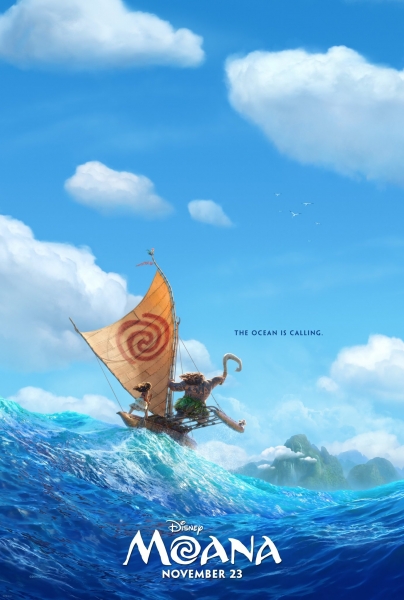
"Moana" Review


Title: Moana

Directed by: Ron Clements and John Musker

Written by: Jared Bush

Year: 2016


This year marks the first time in over a decade that Disney Animation has released two films in the same year. The last time was in 2003 with Lilo and Stitch and Treasure Planet. This year we have already had Zootopia and now we have Moana. I was very excited to see this movie mainly because of the visual style and the fine promotional material. Does Moana sail to success, or does it sink under its own weight?

A young girl by the name of Moana, who is the chieftain's daughter, craves adventure and wants to travel the seas. She gets her chance when she must locate the legendary demigod Maui. Together, the two must help restore the world to the way it used to be before the darkness takes over.


Auli'i Cravalho stars as the character in the title role. Cravalho has never acted before, but I have a feeling things will change given her performance in this movie. Cravalho is a revelation as Moana. She is endearing, sweet, and bold in her voice performance, which all fit the character excellently. Moana is a strong-willed free spirit that wants to absolved of her responsibilities. We have seen this type of character before with other Disney princesses: Belle, Pocahontas, Jasmine, Mulan, Anna, and Merida. Though these traits are highly familiar (perhaps too much so), Moana is different enough to be her own distinguishable princess. The character of Moana seems to be a representation or extension of Cravalho, and though her line delivery is great, it is her singing performance that floored me. The young actress has a softly powerful voice that will leave you speechless. I will get more into the songs later, but Cravalho's singing is definitely one of the film's highlights.

Joining Cravalho is Dwayne Johnson as Maui, a shapeshifting demigod. Johnson's "larger than life" persona matches up with the character of Maui perfectly. His signature charisma leaps off the screen and envelopes the audience, giving Maui a huge presence. Maui is exceedingly likable, and that comes down mainly to Johnson's performance. One of the coolest things about the character is that his tattoos are alive to an extent and act on their own to great comedic and storytelling effect. Maui wears his life story on his skin, which allows for clever unspoken character depth.


The story behind this movie is based on an actual mystery. Around 2,000 years ago, Pacific navigation and exploration suddenly stopped under unknown circumstances. Then, after 1,000 years had elapsed, the travelers began sailing again. Moana seeks to give a plausible explanation for this within a fictional world. The main story is immensely intriguing because the film skillfully establishes a deep mythology. Our two heroes must return the Heart of Te Fiti in order to restore the world to its natural state. The Heart of Te Fiti works as a functional plot MacGuffin that drives the plot forward in an appealing manner, and the interactions between Maui and Moana are charming and entertaining.

The film carries with it a delightful sense of humor. One of Maui's tattoos is an ink version of himself that moves about like a classic cartoon character. His antics are frequently audience-pleasing and incredibly endearing. The main characters get some really good lines, but Hei Hei steals the show in terms of comedy. This vacuous, dull-witted rooster is flat-out hysterical. His purpose in the story is to continuously place Moana in danger and put her at risk in the most oblivious of ways. There is one scene that pays homage to Mad Max: Fury Road on a visual and musical level. This sequence with the Kakamora (coconut pirates) is one of the film's best and funniest.


On a visual level, Moana is nothing short of breathtaking. Allow me to list some of the greatest aspects. The visual style is terrifically inspired by the mythology and scenery of the Pacific Islands. The on-screen explosion of vibrant colors is jaw-dropping and sweeps you away into this world. The diegetic imagery is staggering and wonderfully realized. The use of hand drawn animation for Maui's tattoos was genius and it looks fantastic. The way the water looks and moves is phenomenal. The lush backgrounds are brimming with rich textures and scintillating colors that mix together so well, I can only describe it as hypnotically gorgeous. I have no problem deeming Moana the most beautiful looking film of the year and is certainly one of the prettiest pictures I have ever witnessed. I could make a very strong case for Moana being Disney's best looking film; the animation is that good.

On par with the visuals is the music, which was arranged by various artists. Mark Mancina, Lin Manuel-Miranda, and Opetaia Foa'i have produced a fabulous product. Mancina's compositions underscore the movie mightily. Manuel-Miranda and Foa'i have written such sweet music for this feature. "Where We Are," though it beats you over the head with its message, is an appealing upbeat tune. "How Far I'll Go" is solid and very memorable, even if it is quite similar to Mulan. This song seems to be resonating the most with audiences, but I would argue there are two better songs. "I Am Moana" and "We Know the Way" are the standouts for me. These two songs are emotionally potent (especially the former) and are decidedly uplifting. Cravalho has the voice of an angel, singing with the grace and power of an experienced performer. The way she sings "I Am Moana" is truly chilling in its quality. Johnson receives his own song, "You're Welcome," which is insanely catchy and shows that he is a pretty darn good singer.


However, with the soundtrack start coming my negatives. I think "Shiny" is an absolute dud. The song has too much of a modern influence and, as a result, does not coincide with the film's aspirations. When it plays in the film though, there is one part, when the cave darkens (you will know what I mean) where the song does a complete 180 for a verse or two and is actually really damn good. That is, until the chorus makes its unwelcome return. Also, the creature that sings it, Tamatoa, is very poorly designed. All he is is a giant hermit crab with a shiny shell from all the trinkets he has hoarded. A basic look, but once again, when the cave darkens, his colors alter and he looks amazing.

I mentioned the term "modern influence" when speaking of "Shiny," and that same influence seems to have trickled over to the comedy. There are a couple jokes in this movie that are structured to fit modern humor and these are the ones that fail. There is a joke about Twitter for instance, and lines like "Really? Blowdart in my butt cheek" will severely date this movie.


*SPOILERS AHEAD* Furthermore, Moana commits to the third act conflict that is commonly found in children's and family movies. Moana and Maui have a falling out that will of course be resolved later on. To the film's credit, it is set up much differently than we are used to. My main issue stems from a lack of resolution. The motivation for Maui's return is nowhere to be found in the script. He comes back for absolutely no reason other than to help Moana, which contradicts why he left in the first place. This makes the return feel weightless and the previous conflict entirely unnecessary. Finally, the grandmother passes away near the beginning of the movie. She is resurrected as a glowing stingray, which looks stunning. But when she returns later on in the picture, she communicates with Moana as a human spirit. I feel the death would have been more impactful and spiritual if she had remained a stingray. Her unique design would have allowed for a beautiful visual conversation between her and Moana, and would have even strengthened the latter as a character.


*SPOILER FREE* Moana is a film that embraces its roots and sprouts as a majestic success. The film is worth seeing for the visuals and music alone, both of which are its strongest aspects, the former in particular. I can not gush about these two features enough. Cravalho is outstanding as Moana, especially when singing; Johnson is exceptional; the characters are thoroughly likable; and the adventure is a great deal of fun. I enjoyed it so much I could have done with one or two more islands to visit. There is one song that brings down the soundtrack slightly; character motivations are muddled or absent during the third act; and some of the humor works against the picture's ambitious style. A few other minor negative details keep Moana from being magnificent, but this is still a quality animated feature that you should watch and experience.

Grade: A-